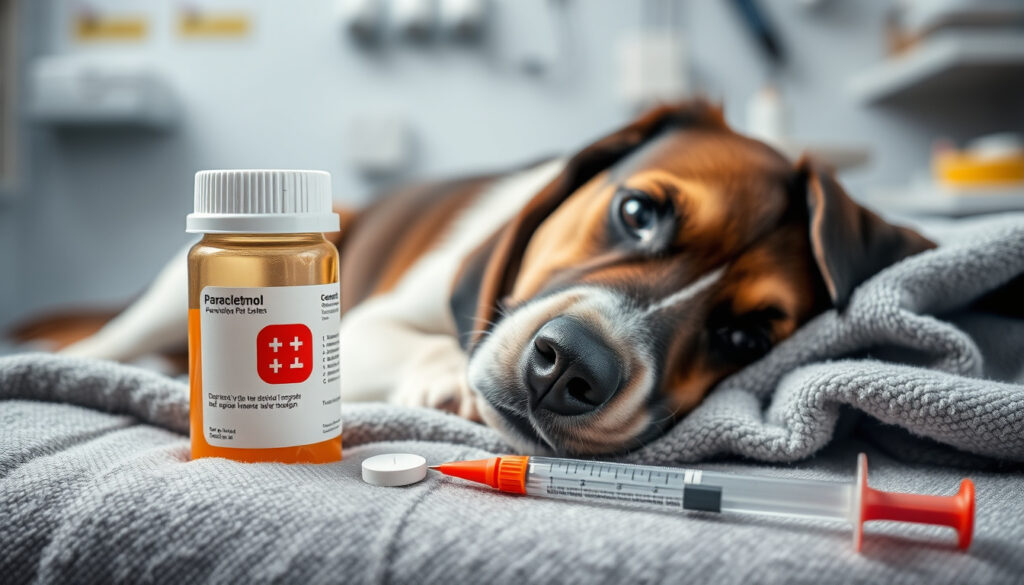
Can You Give a Dog Paracetamol? Safe Dosage & Risks
If you’ve ever watched your dog limp or whimper and wondered whether a half-tablet of paracetamol from your own cabinet could help, you’re not alone. It’s an instinct many owners share — but the margin between relief and harm is razor-thin, and getting it wrong can be life-threatening.
Safe paracetamol dose for dogs: 10–15 mg per kg every 8 hours · Toxic dose threshold: > 50 mg per kg single dose · Primary risk: Liver damage (hepatotoxicity) · Veterinary approval needed: Yes – do not give without prescription
Quick snapshot
- Paracetamol can cause fatal liver necrosis in dogs at high doses (Merck Veterinary Manual (tier 1 veterinary reference))
- Veterinary guidance is required before giving any human medication (Willows Veterinary Centre (UK referral hospital))
- Carprofen (Rimadyl) is an approved dog NSAID (Merck Veterinary Manual)
- Exact margin of safety for paracetamol in different dog breeds
- Long-term effects of low-dose paracetamol in dogs
- At doses above 100 mg/kg — clinical signs of acute toxicosis appear (Merck Veterinary Manual)
- > 200 mg/kg — methemoglobinemia risk (Merck Veterinary Manual)
- > 600 mg/kg — potentially lethal (Merck Veterinary Manual)
- If your dog accidentally ingests paracetamol: call your vet or pet poison helpline immediately
- For chronic pain: ask about approved NSAIDs or gabapentin
Six key specifications every owner should know about paracetamol and dogs.
| Specification | Value |
|---|---|
| Drug class | Analgesic / antipyretic (NSAID alternative) |
| Approved for dogs? | No – off-label use only |
| Safe dose (oral) | 10–15 mg/kg every 8 hours |
| Toxic single dose | > 50 mg/kg |
| Lethal dose | > 600 mg/kg |
| Common adverse effects | Hepatotoxicity, keratoconjunctivitis sicca (>30 mg/kg) |
| Monitoring needed | Liver enzymes, tear production |
| Veterinary oversight | Mandatory |
The pattern: every single dose above 50 mg/kg pushes a dog into danger, and without veterinary calculation, owners have no safe way to determine the line.
Can You Give a Dog Paracetamol?
Is paracetamol safe for dogs?
- Paracetamol is not approved for use in animals, but it has been used effectively in dogs for breakthrough pain under veterinary supervision (Merck Veterinary Manual (veterinary reference)). The established therapeutic dose is 10–15 mg/kg by mouth every 8 hours (Merck Veterinary Manual).
- However, human formulations frequently contain excipients (e.g., xylitol in some liquid preparations) that are toxic to dogs. Only a veterinarian should determine if paracetamol is appropriate (Stem Cell Vet (UK veterinary clinic)).
The catch: the difference between a safe dose and a dangerous one can be as little as a single extra tablet for a small dog. That’s why the stem cell vet warning is non‑negotiable.
A 10-kg dog would reach a potentially toxic dose after ingesting just 500 mg of paracetamol — roughly one standard adult tablet. Without veterinary calculation, owners risk crossing that threshold unknowingly.
What happens if a dog takes paracetamol?
- At doses above 100 mg/kg, clinical signs of acute toxicosis appear — lethargy, vomiting, and abdominal pain (Merck Veterinary Manual).
- Doses exceeding 200 mg/kg can cause methemoglobinemia, making the blood unable to carry oxygen (Merck Veterinary Manual).
- Above 400 mg/kg, CNS depression, kidney failure, and liver necrosis occur; at 600 mg/kg or higher, the outcome is often lethal (Merck Veterinary Manual).
What this means: the progression from therapeutic to fatal can happen with a single miscalculation. A 20-kg dog would need to ingest more than seven 500 mg tablets to suffer toxic effects, according to Willows Veterinary Centre, but a 5-kg puppy reaches that danger zone after just two tablets.
How Much Paracetamol Can My Dog Take?
Paracetamol dosage for dogs by weight
- The recommended dose is 10–15 mg per kg of body weight every 8 hours (PMC (peer-reviewed medical journal)). For a 20-kg dog, that works out to 200–300 mg per dose — often less than a half of a standard 500 mg tablet.
- At doses above 30 mg/kg, keratoconjunctivitis sicca (dry eye) may be induced (PMC).
How often can you give paracetamol to a dog?
- Frequency should not exceed every 8 hours, and treatment duration is typically limited to 1–5 days under veterinary guidance (Merck Veterinary Manual).
- Prolonged use without supervision can harm kidneys and liver, according to Stem Cell Vet.
What Pain Relief Can You Give a Dog Instead of Paracetamol?
Safe dog pain medications
- Carprofen (Rimadyl): a veterinary‑prescribed NSAID for osteoarthritis and post‑surgical pain (Merck Veterinary Manual).
- Meloxicam (Metacam): another NSAID approved for dogs, available as an oral suspension (Merck Veterinary Manual).
- Gabapentin: often used for chronic or neuropathic pain, with a wide safety margin (PMC).
What human painkillers are safe for dogs?
- Ibuprofen: highly toxic — can cause kidney failure and gastrointestinal ulcers at low doses (Merck Veterinary Manual).
- Aspirin: also toxic; doses as low as 50 mg/kg can cause bleeding disorders (Merck Veterinary Manual).
- Naproxen: even more dangerous than ibuprofen — never give.
Three pain relievers, one pattern: every human NSAID carries a significant toxicity risk for dogs, and none should be used without veterinary approval. The trade‑off is clear — what works for you can hurt your pet.
The table below compares the most commonly asked‑about human and veterinary pain options.
| Drug | Safe for dogs? | Prescription required? | Typical dose (dog) | Key risk |
|---|---|---|---|---|
| Paracetamol (acetaminophen) | Only under vet supervision | Yes (human formulations not recommended) | 10–15 mg/kg q8h | Liver necrosis at > 50 mg/kg |
| Ibuprofen | No – toxic | – | N/A | Kidney failure, GI ulcers |
| Carprofen (Rimadyl) | Yes – approved NSAID | Yes | 2–4 mg/kg q12h | GI upset at high doses |
| Gabapentin | Yes – off‑label use | Yes | 5–20 mg/kg q8–12h | Drowsiness (mild) |
The implication: only two of these four drugs — Carprofen and Gabapentin — are consistently safe for dogs under veterinary prescription, while the others pose serious toxicity risks.
What Can I Give My Dog at Home for Pain Relief?
Home remedies for dog pain
- Rest and ice packs can help with acute swelling from minor injuries (Joii Pet Care (online vet service)).
- Over‑the‑counter dog supplements containing glucosamine and chondroitin are safe for joint support — no prescription needed.
- If you need a reliable pet supply source, check out resources like Pet Store Near Me or guides such as Puppies for Sale in Ireland for local options.
When to see a vet for dog pain
- Persistent pain lasting more than 24 hours requires a veterinary diagnosis — don’t assume it’s minor.
- Emergency signs: pale gums, difficulty breathing, collapse, or known ingestion of a toxic substance — go immediately to an emergency clinic.
The pattern: home care is limited to minor, superficial issues. Any pain that affects mobility or appetite demands professional attention.
Owners who delay a vet visit while trying home remedies risk masking a serious condition — such as a fracture, infection, or internal bleeding — that only worsens without proper treatment.
What Is the Silent Killer of Dogs?
Hemangiosarcoma symptoms and risks
- Hemangiosarcoma is a cancer that originates in blood vessel cells and often spreads without any obvious signs until it’s advanced (Merck Veterinary Manual).
- Commonly affects the spleen, liver, or heart of older dogs, especially Golden Retrievers and German Shepherds.
Why early detection is critical
- Because symptoms are vague (lethargy, mild weakness, occasional collapse), many cases are diagnosed only after a tumor ruptures — causing sudden internal bleeding.
- Regular veterinary check‑ups, including abdominal ultrasound, can catch it before it becomes an emergency.
What to watch: if your dog seems “off” without an obvious reason, especially if they’re a breed at risk, a vet visit isn’t overreacting — it’s proactive.
Upsides
- Effective for acute pain when dosed correctly
- Inexpensive compared to some veterinary NSAIDs
- Veterinary formulations (with codeine) available in some countries
Downsides
- Narrow therapeutic index – easy to overdose
- Human formulations may contain toxic excipients (xylitol, alcohol)
- Long‑term risks to liver and kidneys unknown
- Not suitable for dogs with pre‑existing hepatic disease
What to Do If Your Dog Accidentally Takes Paracetamol
- Stay calm and determine how much was ingested — check the tablet strength and weight of your dog.
- Contact your veterinarian or an emergency pet poison hotline immediately. Do not induce vomiting unless instructed.
- If the dose exceeds 50 mg/kg, take your dog to a veterinary clinic right away. Treatment may include activated charcoal, IV fluids, and N‑acetylcysteine (the antidote).
- Monitor for signs of toxicity: vomiting, lethargy, dark urine, or difficulty breathing.
What We Know vs. What We Don’t
Confirmed facts
- Paracetamol can cause fatal liver necrosis in dogs at high doses (Merck Veterinary Manual)
- Veterinary guidance is required before any human medication (Willows Veterinary Centre)
- Carprofen is an approved dog NSAID (Merck Veterinary Manual)
What’s unclear
- Exact margin of safety for paracetamol in different dog breeds
- Long‑term effects of low‑dose paracetamol in dogs
What Experts Say
“Paracetamol is relatively safe in dogs at the correct dose, but human formulations can be toxic because of other ingredients. Owners should never give it without speaking to their vet first.”
— Veterinarian, Willows Veterinary Centre (UK referral hospital)
“Giving your dog medication such as paracetamol can put them at risk. Always consult your vet – they can prescribe a safer option.”
The takeaway for every dog owner is simple: paracetamol can work under veterinary supervision, but the margin for error is tiny. Even one extra tablet can push a dog from relief into liver failure. Safer, approved alternatives exist — carprofen, meloxicam, gabapentin — and they should always be your first conversation with the vet. For owners in Ireland who need immediate supplies or a trusted local clinic, resources like Pet Store Near Me and Puppies for Sale in Ireland can help you find the right help in your area. The choice is clear: when in doubt, call the vet, not the medicine cabinet.
vetsandclinics.com, vetsandclinics.com, merckvetmanual.com, vetic.in, pmc.ncbi.nlm.nih.gov, dvm360.com
Frequently asked questions
Can I give my dog half a paracetamol tablet?
Only if your veterinarian specifically prescribes it and calculates the exact dose. A half‑tablet (250 mg) is already a toxic dose for a small dog under 5 kg.
What are the symptoms of paracetamol poisoning in dogs?
Lethargy, vomiting, dark urine, pale gums, difficulty breathing, and collapse. Signs usually appear within 1–4 hours of ingestion.
How long does paracetamol stay in a dog’s system?
The half‑life is about 2–4 hours in dogs, but liver damage can take longer to manifest. Treatment with N‑acetylcysteine can be effective up to 8–10 hours post‑ingestion.
Can I give my dog Calpol (children’s paracetamol)?
No. Children’s liquid paracetamol often contains xylitol or other sweeteners that are highly toxic to dogs. Stick to a vet‑prescribed product.
What should I do if my dog accidentally ate paracetamol?
Call your vet or a pet poison helpline immediately. Do not induce vomiting unless told to. Bring the tablet packaging if possible.
Is there a dog‑specific paracetamol product?
In some countries, veterinary‑formulated paracetamol with codeine (Pardale‑V) is available by prescription. Human‑grade paracetamol is never recommended.
Are there any pain relief options for dogs with arthritis?
Yes – carprofen (Rimadyl), meloxicam (Metacam), and gabapentin are commonly prescribed. Joint supplements (glucosamine, omega‑3) can also help as supportive care.
More related posts
 How to Spot a Phishing Email: Top Red Flags and Prevention
 Carton House Afternoon Tea: Menu, Price, Etiquette & Booking
 Chicken a la King Recipe: Easy Creamy Classic
 Connolly Hospital Visiting Hours – Times, Rules and Contacts
 How to Clear Cache on iPhone: Step-by-Step Guide
 How Big Is an Acre? Size, Visuals & Comparisons Guide
 Masters of the Air: Season 2, Accuracy, Worth Watching
 How Many Days Till Christmas Eve 2026? Countdown & Date Facts
