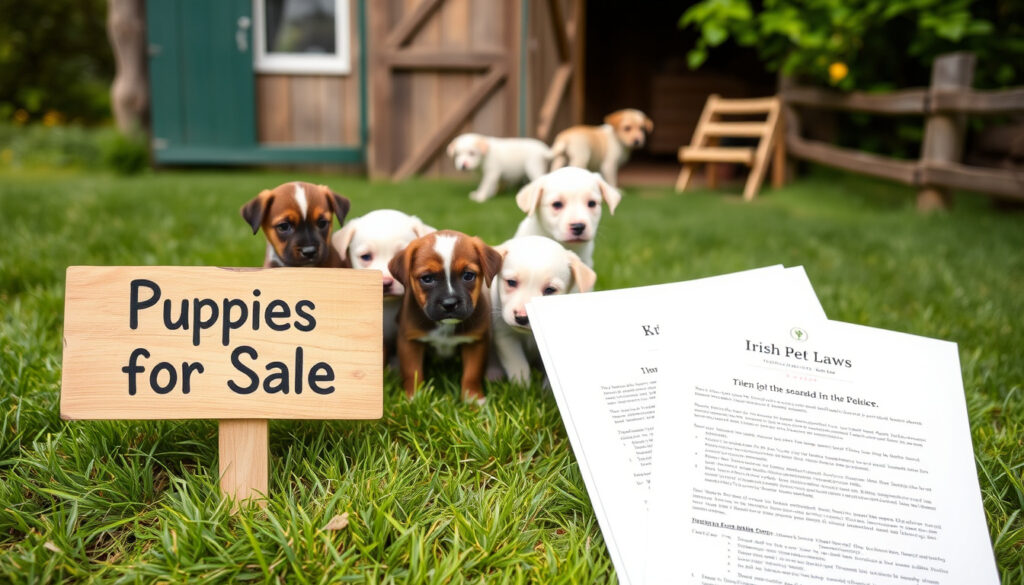
Puppies for Sale in Ireland: Prices, Breeders & Laws
There’s a reason so many Irish families end up scrolling through puppy listings late at night — bringing a dog home is one of life’s genuine joys. But between the excitement and the first sloppy kiss lies a tangle of decisions: where to look, who to trust, and how much to spend. This guide walks you through the practical side of finding a healthy, ethically-bred puppy in Ireland, from the top listing platforms to the legal checks that protect both you and the pup.
Puppy listings on dogs.ie: Over 650 (Dogs.ie) ·
Puppy listings on puppies.ie: 846 (Puppies.ie) ·
Average price range: €500–€2,000 (Dogs.ie pricing) ·
IKC registered breeders: Hundreds (Irish Kennel Club)
Quick snapshot
- Dogs.ie offers a comprehensive buyer guide with price ranges and health checklists (Dogs.ie buyer guide)
- Puppies.ie lists hundreds of puppies for sale across Ireland (Puppies.ie)
- Dogs Trust Ireland provides detailed buyer advice to avoid scams (Dogs Trust Ireland buyer advice)
- Off The MRKT outlines red flags and responsible breeder checkpoints (Off The MRKT guide)
- Mixed-breed dogs typically cost €200–€500 (Dogs.ie pricing)
- Popular purebred dogs like Labradors and German Shepherds range €500–€1,500 (Dogs.ie pricing)
- Champion pedigree lines can exceed €3,000 (Dogs.ie pricing)
- Microchipping is mandatory before sale (Dogs.ie)
- Puppies must be at least eight weeks old before rehoming (Dogs Trust Ireland)
- Full weaning should be completed by seven weeks (Dogs Trust Ireland)
- Dog Breeding Establishment licence may be required (Dogs.ie)
- Adoption from rescues like Dogs Trust Ireland saves a life and costs less (Dogs Trust Ireland)
- Buying from a breeder allows breed selection and health guarantees (Off The MRKT)
- Both require long-term commitment and ongoing costs (Dogs.ie)
The table below captures key figures at a glance. Four facts, one pattern: prices and rules vary widely by breed type, but the legal baseline is the same for everyone.
| Fact | Value |
|---|---|
| Number of puppy listings on top sites | Over 1,500 combined (Puppies.ie, Dogs.ie) |
| Average price | €500 – €2,000 (Dogs.ie pricing) |
| Most common breeds | Labrador, German Shepherd, Cockapoo (Off The MRKT) |
| Registration requirement | Microchip mandatory; IKC registration optional (Dogs Trust Ireland) |
Where can I find puppies for sale in Ireland?
Top puppy listing websites
- Dogs.ie — Ireland’s largest dedicated puppy listing site, carrying hundreds of litters at any time. Its buyer guide (Dogs.ie) offers step-by-step advice on health checks and pricing.
- Puppies.ie — advertises over 800 puppies regularly. The platform allows filtering by breed, location, and price (Puppies.ie).
- Dogstop.ie — combines sales and adoption listings, though it lacks the volume of the bigger sites (Dogstop.ie).
The implication: listing sites give you breadth, but none vets breeders — that part is on you.
Irish Kennel Club breeder directory
The Irish Kennel Club (IKC official site) maintains a directory of registered breeders who commit to its code of ethics. Breeders listed here are required to follow health testing and breeding standards. That makes the IKC directory a reliable starting point for buyers who prioritise pedigree and health guarantees.
The pattern: registration with the IKC is a signal of accountability, but it does not replace your own inspection.
Local classifieds and social media groups
Facebook groups, DoneDeal, and local newspapers remain popular channels. However, Dogs Trust Ireland (Dogs Trust Ireland buyer advice) warns that unregulated online sources carry higher scam risk. If you go this route, apply the same rigorous checks you would with any breeder.
The catch: convenience online often trades off against traceability and legal protection.
How much does a puppy cost in Ireland?
Average price by breed
- Mixed‑breed puppies: €200 – €500 (Dogs.ie)
- Popular purebreds (Labrador, German Shepherd, Cockapoo): €500 – €1,500 (Dogs.ie)
- Champion pedigree lines with full IKC papers: €1,500 – €3,000+ (Dogs.ie)
Factors influencing price
Breed popularity, bloodline quality, health testing done by the breeder, and geographical location all affect the final figure. Off The MRKT notes that a very low price can signal poor breeding conditions or hidden health issues — a bargain puppy may cost you far more in vet bills.
Hidden costs of puppy ownership
Beyond the purchase price, expect €30–€60 per month for food, €20–€50 per month for insurance, and €200–€400 per year for routine vet care, according to Dogs.ie’s cost estimates. First‑year costs including vaccinations, microchipping, spay/neuter, and equipment can easily exceed €1,000.
A €500 puppy can become a €2,000 annual commitment. Budgeting for the full first year — not just the sale price — is the difference between a happy owner and a re‑homed dog.
How to find a reputable dog breeder in Ireland?
Checking Irish Kennel Club registration
Start with the Irish Kennel Club breeder search. IKC‑registered breeders must comply with health‑testing standards, and the directory allows you to verify their status. If a breeder claims IKC affiliation, confirm it directly on the IKC site.
Visiting the breeder
Off The MRKT (Off The MRKT guide) insists that a responsible breeder will invite you to their home to see the puppy with its mother. Dogs.ie (Dogs.ie buyer guide) adds that you should always ask to see the puppy in its home environment — not a car park or a neutral location.
Red flags to avoid
- Refusal to allow a visit (Off The MRKT)
- Offering multiple breeds at once (same source)
- Requiring a deposit before you’ve seen the puppy (same source)
- Meeting in a car park or public place (same source)
- Puppies that appear too young or are not fully weaned by seven weeks (Dogs Trust Ireland)
What this means: each red flag is a shortcut that unethical breeders rely on. Refusing any one should end the transaction.
What are the legal requirements for buying a puppy in Ireland?
Microchipping and registration
All puppies sold in Ireland must be microchipped before the sale is completed. Dogs.ie (Dogs.ie) recommends verifying the microchip number and checking it against breeder records. The microchip must be registered in the buyer’s name after purchase.
Vaccination requirements
Puppies should have their first vaccination (typically DHPPi) at around 6–8 weeks, and a second booster by 12 weeks. Reputable breeders will provide a vaccination card. Dogs Trust Ireland (Dogs Trust Ireland) advises that puppies should not be rehomed before eight weeks old and must be fully weaned by seven weeks.
Consumer rights and purchase contracts
A written contract is strongly recommended. It should include the purchase price, microchip details, vaccination history, breeder’s contact information, and any health guarantees. Dogs.ie (Dogs.ie) advises getting a vet check within 48 hours of purchase — that gives you legal leverage if the puppy has undisclosed health problems.
The implication: paperwork is not bureaucracy; it is your only formal protection if something goes wrong.
Is it better to adopt or buy a puppy in Ireland?
Pros of adopting from a rescue
- Lower upfront cost (adoption fees typically €100–€250)
- You save a life and free space for another animal (Dogs Trust Ireland)
- Many rescue dogs are already vaccinated, microchipped, and neutered
Pros of buying from a breeder
- Predictability in breed size, temperament, and coat type
- Health records from parent dogs (e.g., hip scores, eye tests)
- Access to specific breeds not commonly found in rescues (Off The MRKT)
Cost and commitment comparison
The initial outlay for a rescue is lower, but both paths come with the same ongoing costs — food, insurance, vet care — that add up to roughly €1,200–€2,000 per year. The real difference is purpose: adoption gives a second chance; buying gives you breed‑specific knowledge. Neither guarantees a trouble‑free pet, but both demand the same long‑term commitment.
The pattern: the upfront price gap narrows fast once you factor in lifetime care, so the decision should rest on lifestyle fit rather than short-term savings.
A rescue from Dogs Trust Ireland costs a fraction of a breeder puppy, but you trade breed certainty for the satisfaction of providing a home. For families dead set on a hypoallergenic coat or a specific size, a registered breeder is the safer bet.
Steps to Buying a Puppy in Ireland
- Research breeds and budgets — Use the price ranges above to narrow your options. Check Dogs.ie’s breed profiles for health issues common to each breed.
- Find a breeder — Start with the IKC breeder directory or a trusted platform like Dogs.ie.
- Visit the breeder — Insist on seeing the puppy with its mother in the home environment (Off The MRKT).
- Check documentation — Request vaccination records, microchip details, and any health certificates (Dogs.ie).
- Get a written contract — Include price, health guarantee, and terms of sale (Dogs.ie).
- Vet check within 48 hours — A quick visit to your vet confirms the puppy is healthy and gives you recourse if issues appear (Dogs.ie).
The implication: following these six steps systematically removes most of the risk from a puppy purchase.
Pros and Cons at a Glance
Upsides
- Adoption saves lives and costs less (Dogs Trust Ireland)
- Buying from a breeder offers health history and breed guarantees (Off The MRKT)
- IKC breeders commit to ethical standards (Irish Kennel Club)
Downsides
- Cheap puppies can hide health issues and puppy‑farm origins (Off The MRKT)
- Unregulated online sellers may not vaccinate or microchip properly (Dogs Trust Ireland)
- Both adoption and purchase carry ongoing costs of €1,200+ per year (Dogs.ie)
What We Know and What’s Unclear
Confirmed facts
- Irish law requires microchipping of puppies before sale (Dogs.ie)
- Top listing sites include dogs.ie, puppies.ie, dogstop.ie (multiple sources)
- Average price range reported by multiple platforms: €200 – €3,000+ (Dogs.ie)
- Puppies must be at least eight weeks old before rehoming (Dogs Trust Ireland)
What’s unclear
- Exact number of puppy mills in Ireland (not officially tracked)
- Percentage of puppies sold through unregulated channels (no census data)
- How many online “breeders” are actually backyard operations (anecdotal, not quantified)
Expert Perspectives
“A responsible breeder will usually allow an in-person visit and will let the buyer see the puppy in its home environment. If someone refuses that, walk away.”
— Advice from Off The MRKT, an Irish lifestyle publication covering responsible pet ownership
“We always recommend insisting on seeing the puppy with its mother. A puppy separated too early can have lifelong behavioural issues.”
— Dogs.ie buyer guide, a leading Irish puppy listing platform
“Never buy a puppy from an online source without careful research. Many scams look professional.”
— Dogs Trust Ireland, the country’s largest dog welfare charity
Finding the right puppy in Ireland isn’t a transaction — it’s a responsibility that starts long before you hand over any money. The platforms you use, the breeder you choose, and the legal checks you complete all shape whether your new family member starts life healthy and happy. For every buyer in Ireland, the choice is clear: treat the search like a serious commitment, or risk a broken heart and a drained bank account.
Related reading: Dogs for Sale in Tipperary · Maltipoo for Sale in Ireland
For those interested in a specific breed, our guide to Rottweiler puppies for sale in Ireland provides detailed pricing and breeder information.
Frequently asked questions
How to avoid puppy scams in Ireland?
Always visit the breeder in person, see the puppy with its mother, and never pay a deposit before viewing. Use official directories like the IKC breeder list and check reviews online. Dogs Trust Ireland (Dogs Trust Ireland buyer advice) advises against buying from sellers who refuse a video call or visit.
What vaccinations do puppies need in Ireland?
The core vaccine is DHPPi (distemper, hepatitis, parvovirus, parainfluenza), given at 6–8 weeks and boosted at 12 weeks. Leptospirosis and rabies vaccinations are also recommended. A veterinarian will provide a vaccination record (Dogs.ie).
How to train a new puppy?
Start with house training and basic commands (sit, stay, recall). Positive reinforcement — treats and praise — works best. Puppy socialisation classes are widely available in Ireland and help prevent behavioural issues. Consult your vet for local trainer recommendations.
What is the best diet for a puppy?
Choose a high‑quality puppy food that meets AAFCO or FEDIAF standards. Large‑breed puppies need a specifically formulated food to control growth rate. Fresh water is essential. Avoid table scraps and bones. Your breeder or vet can advise on portion sizes.
How to prepare your home for a puppy?
Puppy‑proof by removing electrical cables, small objects, toxic plants, and cleaners. Set up a cosy bed, crate, food and water bowls, and puppy pads. Designate a quiet area away from drafts. Think of it as baby‑proofing on four legs.
Do I need pet insurance for my puppy in Ireland?
Pet insurance is not legally required, but it is strongly recommended. Vet bills for accidents or illnesses can run into thousands of euros. Many policies cover routine care and emergency treatment. Compare providers like Allianz, Petplan, and 123.ie for puppy‑specific plans.
How to socialize a new puppy?
Expose your puppy to different people, dogs, environments, and sounds gradually — ideally after the second vaccination. Puppy classes provide controlled socialisation. Never force interaction; let the puppy approach at its own pace. Early socialisation reduces fear and aggression later.
More related posts
 Wie Organisiert Man Die Küche – Practical Tips and Steps
 How Did Epstein Make His Money? Verified Sources & Unanswered Questions
 Cork 5-Day Weather Forecast: Accuracy Guide
 Eye Test Near Me: Ireland Free Tests & Costs
 TU Dublin Past Exam Papers: Find & Download Free PDFs
 Things to Do This Weekend in Ireland: Events Guide
 2026 Grammy winners: Full list & surprises
