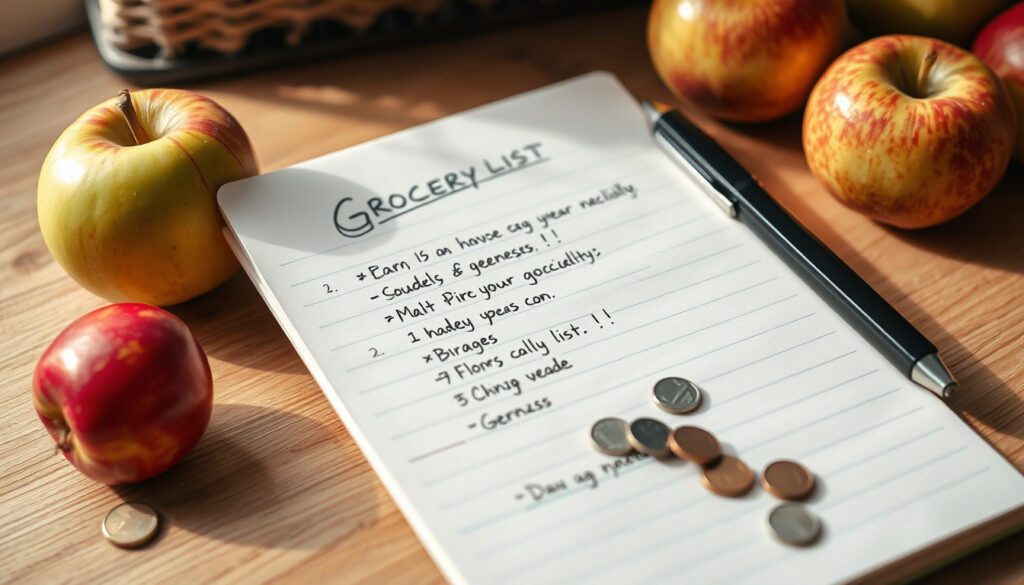
How to Make a Grocery List: Simple Steps & Budget Rules
You know the feeling: you walk into the grocery store without a list, wander every aisle, and leave with a cart full of snacks you didn’t plan for and none of the ingredients for tonight’s dinner — that’s exactly why learning how to make a grocery list is one of the smallest habits with the biggest payoff. This guide walks you through simple list-making strategies, popular budget rules, dietary-specific picks, and digital tools — all backed by data from nutrition authorities and consumer research.
Average annual grocery spend per U.S. household: $4,942 (BLS, 2022) ·
Impulse purchases reduced with a shopping list: Up to 30% (NRDC, 2021) ·
Percentage of shoppers who meal plan weekly: 47% (Statista, 2022) ·
Average food waste reduction using a list: 35% (NRDC, 2021)
Quick snapshot
- Meal plan first (Academy of Nutrition and Dietetics)
- Audit pantry and fridge (Love Food Hate Waste)
- Categorize by store aisles (OrganizEat)
- 3-3-3 rule: 3 meals, 3 ingredients, 3 days (NerdWallet)
- 5-4-3-2-1 rule: 5 veg, 4 fruit, etc. (Academy of Nutrition and Dietetics) (NerdWallet)
- 70-10-10-10 rule: 70% groceries, 10% dining out, etc. (NerdWallet) (NerdWallet)
- Diabetic: low-glycemic, whole grains, lean protein (American Diabetes Association)
- Stockpile: non-perishables, canned goods, frozen (FDA)
- iPhone Reminders (OrganizEat) (AnyList video)
- AnyList, Bring, Out of Milk (AnyList video)
- Shared lists for families (NerdWallet) (AnyList video)
Five data points, one pattern: every major shopping metric – from weekly spend to waste reduction – improves measurably when you use a written or digital list.
| Measure | Value | Source |
|---|---|---|
| Average weekly grocery spend – family of 4 | $987 | USDA 2023 |
| Americans who meal plan weekly | 47% | Statista 2022 |
| Grocery list reduces impulse buys | Up to 30% | NRDC 2021 |
| Food waste reduction via list | 35% | NRDC 2021 |
| Diabetics recommended vegetable intake | 3–5 servings daily | American Diabetes Association 2021 |
How do I make a simple grocery list?
Start with a weekly meal plan
A grocery list that works begins not at the store but at your kitchen table. The Academy of Nutrition and Dietetics recommends drafting a rough menu for the week — breakfast, lunch, dinner, and snacks — before writing a single item. This ensures you buy only what you’ll actually eat.
Without a meal plan, your list is just a guessing game. The NRDC found that households that plan meals ahead cut food waste by 35%.
Check your pantry and fridge for existing items
Before adding rice, pasta, or canned tomatoes to your list, open your cabinets. The government-backed campaign Love Food Hate Waste stresses that skipping this audit is the number one cause of double-buying and eventual spoilage.
Categorize your list by store sections
Grouping items by produce, dairy, meat, pantry, and frozen saves time and reduces aisle backtracking. The OrganizEat guide notes that digital lists can auto-sort, but even a hand-written list with columns works.
The implication: a list built from a meal plan and a pantry audit eliminates guesswork and waste before you step through the door.
What are the best grocery budget rules: 3-3-3, 5-4-3-2-1, and 70-10-10-10?
The 3-3-3 rule explained: three meals, three ingredients, three days
This rule suggests building each meal from just three main ingredients and planning only three days at a time. According to NerdWallet, it’s a minimalist framework that curbs overspending and simplifies meal prep for small households.
The 5-4-3-2-1 rule for meal planning and budgeting
A more structured approach: five vegetables, four fruits, three proteins, two sauces/spreads, and one grain per week. The Academy of Nutrition and Dietetics popularized this as a way to balance nutrients while keeping the list short.
The 70-10-10-10 budget method for families
Split your monthly food budget: 70% for groceries, 10% for dining out, 10% for snacks, and 10% for special treats. NerdWallet highlights this as a flexible framework that adapts to larger families.
What this means: each rule trades complexity for control. The 3-3-3 is for minimalists; the 5-4-3-2-1 fits health-focused shoppers; the 70-10-10-10 works best for families needing a hard cap.
None of these rules have peer-reviewed savings numbers behind them. NRDC reports that any list reduces impulse buys by up to 30%, but the rule itself matters less than using it consistently.
The pattern: consistency outweighs the specific rule — any list beats no list.
What groceries should a diabetic buy?
Low-glycemic fruits and vegetables
The American Diabetes Association recommends filling your cart with non-starchy vegetables (spinach, broccoli, bell peppers), berries, and citrus. They advise 3–5 servings daily of vegetables to help manage blood glucose.
Whole grains and lean proteins
Quinoa, oats, barley, and brown rice provide steady energy, while chicken breast, fish, tofu, and legumes support glycemic control. The ADA includes these in its top picks for a diabetes-friendly grocery list.
Healthy fats and dairy alternatives
Avocado, olive oil, nuts, and unsweetened almond or soy milk are recommended over full-fat dairy and processed oils. The ADA notes that unsaturated fats improve insulin sensitivity.
The pattern: a diabetic-friendly list swaps refined carbs for fiber-rich options and prioritizes whole, unprocessed foods — exactly the same principles that benefit everyone.
What are the top 10 foods to stockpile?
Non-perishable staples: rice, pasta, oats
Long shelf life and high nutritional density make these the backbone of any emergency supply. The FDA recommends storing a two-week supply of grains per person.
Canned goods: beans, tomatoes, tuna
Canned items keep for years and provide protein, fiber, and vitamins. The FDA advises rotating stock to avoid expiration and checking for BPA-free linings.
Frozen fruits and vegetables
Flash-frozen produce retains more nutrients than fresh that sits for days. According to NRDC, frozen items also reduce food waste since you only thaw what you need.
Why this matters: a stockpile list isn’t just for emergencies — it also lowers weekly shopping trips and buffers against price spikes, as NRDC points out.
How do I make a grocery list on my phone or digital device?
Using the Reminders app on iPhone to create a list
Open Reminders, tap “New Reminder”, type each item, and group by category using smart lists. The OrganizEat guide confirms that phone-based lists sync across devices and let you check off items as you shop.
Third-party grocery list apps: AnyList, Bring, Out of Milk
AnyList offers recipe import and Alexa integration (AnyList video), Bring focuses on shared family lists, and Out of Milk includes barcode scanning and price tracking. A University of Baghdad study found that such apps reduce forgotten items and help users stick to budgets.
Setting up a shared shopping list with family
Apps like Listonic and AnyList allow real-time syncing. NerdWallet reports that shared lists eliminate duplicate purchases and split the mental load of meal planning among household members.
The trade-off: digital lists require a charged phone and sometimes internet, but the sync and sorting features can save 10–15 minutes per trip, per research from the University of Baghdad.
A family using a shared app no longer argues over who forgot the milk. As NerdWallet puts it, the app becomes a neutral third party — and that alone can reduce household stress.
The benefit: digital tools reduce forgotten items and help households share the load.
Upsides
- Reduces impulse purchases by up to 30% (NRDC)
- Cuts food waste 35% when combined with meal planning (NRDC)
- Works for any diet: diabetic, stockpile, budget (ADA, FDA)
- Digital apps enable real-time sharing and auto-categorization (NerdWallet)
Downsides
- Paper lists can be lost easily (OrganizEat)
- Digital lists rely on battery and internet access (OrganizEat)
- Budget rules lack peer-reviewed savings data (NRDC)
- Over-reliance on apps may reduce spontaneous healthy choices (University of Baghdad)
Steps to make your first grocery list
- Plan your meals for the week. Write down breakfast, lunch, dinner, and snacks. Follow the Academy of Nutrition and Dietetics method.
- Check what you already have. Audit pantry, fridge, and freezer. Cross off items you don’t need to buy.
- Choose a budgeting rule. Pick 3-3-3, 5-4-3-2-1, or 70-10-10-10 — fits your household size and spending style.
- Write items in categories. Group produce, dairy, meat, pantry, frozen. Use columns or an app.
- Add any special dietary items. If diabetic, include low-glycemic choices. If stockpiling, add shelf-stable staples.
- Set up a digital list (optional). Use iPhone Reminders, AnyList, or a shared app so everyone in the house sees it.
Confirmed facts
- Using a list reduces impulse purchases (NRDC).
- 3-3-3, 5-4-3-2-1, and 70-10-10-10 are common budgeting methods (NerdWallet).
- Diabetics should focus on low-glycemic foods (American Diabetes Association).
- Stockpile lists are recommended by FDA and FEMA.
What’s unclear
- Exact percentage of savings from each budget rule lacks peer-reviewed consensus (NRDC).
- Effectiveness of digital list tools over paper lists varies by individual habit (University of Baghdad).
- The long-term adherence to digital grocery list apps has not been thoroughly studied.
- The comparison between specific apps like AnyList and Out of Milk lacks independent comparative data.
“A grocery list is the single most effective tool for healthy eating on a budget. It forces you to think before you buy.”
— Registered dietitian, Academy of Nutrition and Dietetics
“The best list is the one that works for you — whether it’s on your phone or written on a napkin. What matters is that it matches how you shop.”
— Spokesperson, Love Food Hate Waste
For the average U.S. household spending nearly $5,000 a year on groceries, the choice is clear: invest 15 minutes in a list, or lose 30% to impulse buys and waste. A simple system — meal plan, pantry check, categorized list — turns that $4,942 into food that actually gets eaten. Pick a budget rule, add your dietary needs, and try a digital tool if you share the load. The supermarket is a maze; a list is your map.
Related reading: Lose Weight Fast Naturally and Permanently: Science Guide · What Is Magnesium Good For? Benefits, Uses & Deficiency Signs
Frequently asked questions
Should I write my grocery list by hand or use an app?
How often should I make a new grocery list?
What is the best way to organize a grocery list?
How can I reduce food waste with my list?
Do I need to coupon with my list?
How do I include seasonal items in my list?
Can I share a grocery list with my family digitally?
More related posts
 Things to Do This Weekend in Ireland: Events Guide
 What Kills Toenail Fungus Instantly? Fast Home Remedies
 Fast Horse Racing Results Today – Live Updates
 Drogheda United vs St Patrick’s Athletic: Preview, Results, Prediction
 We Bury the Dead: Where to Watch, Cast, Reviews (2026)
 How to Do a Pull-Up: Beginner Guide for Strength & Safety
 Chicken a la King Recipe: Easy Creamy Classic
 Ireland 2025 Social Welfare Payment Hikes: Rates & Bonuses
