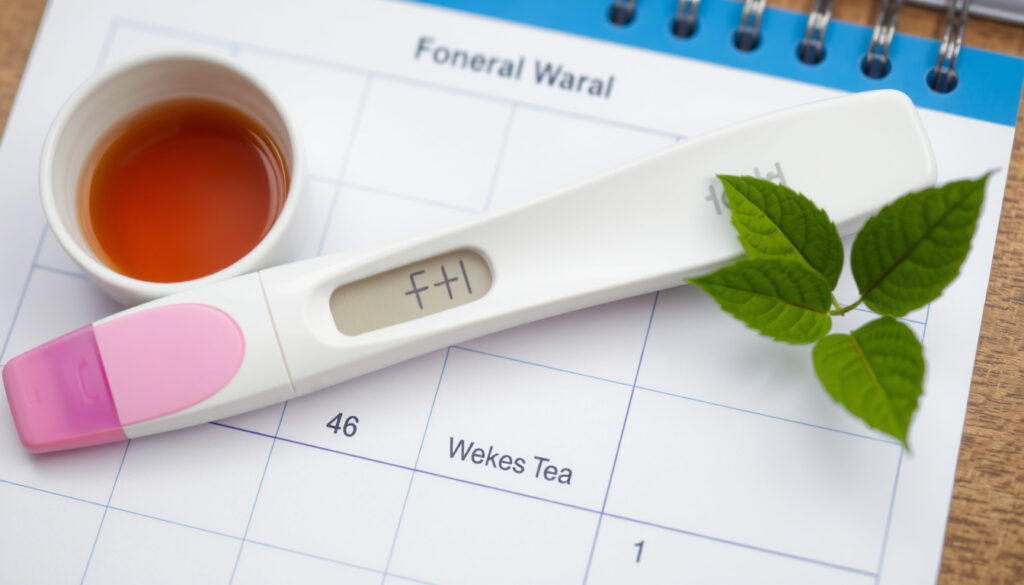
4 Weeks Pregnant Symptoms: What to Expect
Anyone who has ever stared at a home pregnancy test waiting for a second line knows that the first few weeks of pregnancy feel like a mix of hope, uncertainty, and a lot of Googling. At 4 weeks pregnant, your body is already working hard: the fertilized egg has just implanted into the uterine lining, and your cells are beginning to produce hCG, the hormone that makes pregnancy tests turn positive.
Implantation typically occurs 6–12 days after ovulation ·
hCG level at 4 weeks 5–426 mIU/mL ·
Percentage of women with implantation bleeding about 25% ·
Morning sickness usually starts around week 6 ·
Missed period is the most common early sign first noticeable symptom
Quick snapshot
- Missed period (NHS (UK national health service))
- Sore breasts (Cleveland Clinic (US medical center))
- Fatigue (NHS)
- Metallic taste (NHS)
- Nausea (NHS)
- Alcohol (Mayo Clinic (US nonprofit medical center))
- Smoking (Mayo Clinic)
- Raw shellfish (Mayo Clinic)
- High-mercury fish (Mayo Clinic)
- Unpasteurized dairy (Mayo Clinic)
- Wait until after missed period (Clearblue (home pregnancy test brand))
- Use first morning urine (Medical News Today (health news site))
- Blood test is more accurate (NHS)
- False negatives are possible (Medical News Today)
- Blastocyst implants in uterus (NHS)
- Begins producing hCG (Cleveland Clinic)
- Cells differentiate into embryo and placenta (NHS)
- No heartbeat yet (Clearblue)
Five key facts that sum up where you and your baby stand at 4 weeks:
| Fact | Details |
|---|---|
| Pregnancy week | 4 |
| Baby size | 0.04 inches (1 mm) – a cluster of cells |
| hCG range | 5–426 mIU/mL |
| Common symptoms | Missed period, implantation bleeding, sore breasts, fatigue |
| Key milestone | Implantation complete |
| Implantation bleeding duration | Few hours to 2 days (Cleveland Clinic) |
| Morning sickness typical start | Around week 6 (NHS) |
| When to test | After missed period for best accuracy (Clearblue) |
| Caffeine limit | 200 mg per day (Tommy’s (UK pregnancy charity)) |
| Fetal movement felt? | Not yet — embryo stage (Clearblue) |
The pattern: most of these early signs are driven by the same hormonal surge, so they often come as a cluster — not a single symptom.
What are the signs of a healthy pregnancy at 4 weeks?
Common early symptoms
- Missed period — often the first sign (NHS)
- Sore breasts — caused by rising estrogen and progesterone (Cleveland Clinic)
- Fatigue — your body is working overtime to support the implantation (NHS)
- Metallic taste — a common but less known early sign (NHS)
- Nausea — though it typically kicks in around week 6, some women feel it earlier (NHS)
Many of these symptoms mirror PMS, which is why the first weeks can be confusing. The difference is that pregnancy symptoms persist and intensify, while PMS symptoms fade once your period starts.
Implantation bleeding vs. period
- Implantation bleeding is light pink, brown, or dark brown — not bright red like a period (Cleveland Clinic)
- It usually lasts a few hours to about two days, not a full week (Cleveland Clinic)
- It does not soak through a pad (Cleveland Clinic)
- Mild cramps may accompany the spotting (Tommy’s)
What this means: if you see very light spotting about 6–12 days after ovulation, it’s likely implantation — not a period. But any bleeding that worries you should be checked by a doctor.
When to take a pregnancy test
- Wait until after your missed period for the most reliable result (Clearblue)
- Some sensitive tests can detect hCG as low as 5–10 mIU/mL, but false negatives are common if you test too early (Medical News Today)
- A blood test from your doctor is more sensitive than a urine test (NHS)
Testing too early can give a false negative, leading to unnecessary disappointment. The NHS recommends testing from the day your period is due.
The catch: even with a negative test, if your period doesn’t arrive, repeat the test a few days later. hCG levels double every 48–72 hours in early pregnancy.
What shouldn’t you do at 4 weeks pregnant?
Alcohol and smoking
- Avoid alcohol completely — it can affect the developing embryo (Mayo Clinic)
- Smoking and vaping reduce oxygen to the baby and increase risk of miscarriage (Mayo Clinic)
- Recreational drugs, including cannabis, should be stopped (Tommy’s)
The trade-off: giving up these habits early is one of the most effective ways to protect your baby’s development from the very start.
Medications to avoid
- Check with your doctor before taking any over-the-counter or prescription medication (Tommy’s)
- Common painkillers like ibuprofen are not recommended during pregnancy; paracetamol is safer but use sparingly (NHS)
- Some herbal supplements can be harmful — always consult a healthcare provider (Mayo Clinic)
Why this matters: at 4 weeks, the baby’s organs are beginning to form, and some medications can interfere with that process.
Lifestyle adjustments
- Limit caffeine to 200 mg per day — about one 12 oz coffee (Tommy’s)
- Avoid raw fish, deli meats, and high-mercury fish like shark, swordfish, and king mackerel (Mayo Clinic)
- Unpasteurized dairy and soft cheeses can carry listeria — avoid them (Mayo Clinic)
- Strenuous exercise that could injure the abdomen is not recommended, but gentle activity like walking is fine (Healthline (health information publisher))
The pattern: the first trimester is about protecting the embryo from potential toxins and infections, so the list of “avoid” is long but straightforward.
Will I test positive at 4 weeks pregnant?
How pregnancy tests work
- Home pregnancy tests detect hCG in urine (NHS)
- The hormone becomes detectable 6–12 days after ovulation, but levels vary widely (Cleveland Clinic)
- Some tests are more sensitive than others — check the box for the minimum mIU/mL threshold (Clearblue)
What this means: if you test on the day of your missed period, most tests will be accurate. But testing earlier than that increases the chance of a false negative.
Implantation timing and hCG
- Implantation occurs about 6–12 days after ovulation (Cleveland Clinic)
- hCG starts being produced immediately after implantation and doubles every 48–72 hours (NHS)
- At 4 weeks, hCG levels range from 5 to 426 mIU/mL (NHS)
Some women get a positive test as early as 10 days past ovulation, while others don’t test positive until a week after their missed period. Both can be normal.
False negatives at 4 weeks
- False negatives are common if you test too early or use diluted urine (Medical News Today)
- Using first morning urine gives the most concentrated sample (Medical News Today)
- If you get a negative but still no period, wait 3–5 days and test again (Clearblue)
The catch: a negative test at 4 weeks doesn’t mean you’re not pregnant; it may just mean your hCG hasn’t reached a detectable level yet.
How does my stomach feel at 4 weeks pregnant?
Cramping and bloating
- Implantation cramping is mild and feels like pulling or pinching in the lower abdomen (Tommy’s)
- Bloating is common due to the hormone progesterone slowing digestion (NHS)
- Some women feel mild abdominal pressure as the uterus begins to stretch (Medical News Today)
What this means: these sensations are normal and usually not a cause for concern. But if cramping is severe or accompanied by heavy bleeding, contact your doctor.
Where is the baby located at 4 weeks?
- The baby is a cluster of cells (blastocyst) that has just implanted into the uterine lining (NHS)
- It is about 0.04 inches (1 mm) — the size of a poppy seed (NHS)
- The cells are already differentiating into the embryo and placenta (NHS)
The pattern: at 4 weeks, there is no visible bump. The uterus is still below the pubic bone, so any bloating you feel is from hormones, not from the baby’s size.
Mild abdominal pressure
- Some women report a feeling of fullness or pressure in the lower abdomen (Medical News Today)
- This is likely due to increased blood flow to the pelvic area (Cleveland Clinic)
- It is not the same as the pressure felt later in pregnancy when the baby is larger (Clearblue)
If you experience sharp or one-sided pain, especially with shoulder pain or dizziness, seek medical attention immediately — it could be a sign of ectopic pregnancy.
Is 4 weeks too early for morning sickness?
Nausea timing
- Morning sickness typically starts around week 6 of pregnancy (NHS)
- Some women experience nausea earlier due to rapidly rising hCG levels (NHS)
- Nausea is not a reliable early sign at 4 weeks because it can be absent or mild (Cleveland Clinic)
What this means: if you feel queasy at 4 weeks, it could be a sign of high hCG, but it’s also normal to have no nausea at all. Don’t worry if you don’t feel sick.
What is the hardest week in early pregnancy?
- Many women report that weeks 9–10 are the hardest due to peak hCG levels causing maximum nausea and fatigue (NHS)
- Week 4 is generally not the hardest; the emotional uncertainty and waiting for a test result can be stressful, but physical symptoms are often mild (Tommy’s)
- If you are struggling with anxiety or physical symptoms, reach out to your doctor or midwife (Tommy’s)
The trade-off: the first trimester is a marathon, not a sprint. The hardest weeks are ahead, but knowing that can help you pace yourself and prepare.
Managing early symptoms
- Eat small, frequent meals to keep blood sugar stable (NHS)
- Stay hydrated — water, ginger tea, or electrolyte drinks can help with nausea (NHS)
- Rest when you need to — fatigue is your body’s way of telling you to slow down (Cleveland Clinic)
- If morning sickness becomes severe, talk to your doctor about safe anti-nausea options (Tommy’s)
Good symptom management in early pregnancy can reduce stress and improve your overall experience. The goal is to feel supported, not just to “get through it.”
Timeline: What happens in the first weeks
Four key milestones that mark the earliest stage of pregnancy:
| Period | Event |
|---|---|
| Week 3–4 | Ovulation, fertilization, and implantation |
| Week 4 | hCG becomes detectable; missed period may occur |
| Week 5–6 | Morning sickness often begins |
| Week 9–10 | Peak hCG levels, hardest week of first trimester |
The pattern: the timeline from implantation to peak hCG is about 6 weeks, and each week brings a new hormonal shift that changes how you feel.
Confirmed facts vs. What’s unclear
- Implantation occurs 6–12 days after ovulation (Cleveland Clinic)
- hCG is detectable in blood at 4 weeks (NHS)
- Missed period is a common early sign (NHS)
- Exact timing of morning sickness onset varies widely (NHS)
- Whether all women experience implantation bleeding (Cleveland Clinic)
- Accuracy of home pregnancy tests at 4 weeks depends on individual hCG levels (Medical News Today)
Expert perspectives
At 4 weeks pregnant, some people have no symptoms yet, while others notice a missed period, sore breasts, nausea, tiredness, frequent urination, bloating, and cramping.
— NHS (UK national health service)
Light spotting can happen around 4 weeks as the fertilised egg burrows into the uterus.
— NHS
Implantation bleeding is a possible early symptom.
— Tommy’s (UK pregnancy charity)
Symptoms like abdominal pressure and tender breasts may appear as the blastocyst burrows into the uterine lining.
For newly pregnant women in the UK, the implication is clear: call your GP or midwife early to confirm the pregnancy and get advice on supplements, diet, and what to watch for. The alternative — waiting and worrying — is unnecessary when early support is just a phone call away.
If you’re noticing early signs, our detailed guide on 4 weeks pregnant symptoms covers what’s normal and when to seek advice.
Frequently asked questions
Can you feel pregnancy symptoms at 4 weeks?
Yes, some women feel symptoms like sore breasts, fatigue, and mild cramping, but others have no symptoms at all. Both are normal. (NHS)
How soon after implantation can you test positive?
Most home tests can detect hCG within 6–12 days after ovulation, but for the most reliable result, wait until the day of your missed period. (Clearblue)
What does 4 weeks pregnant discharge look like?
Milky white discharge is common. Implantation bleeding is light pink, brown, or dark brown spotting. (NHS)
Is cramping at 4 weeks normal?
Mild cramping can be normal as the uterus adjusts. But if it is severe or one-sided, contact your doctor. (Tommy’s)
When should I call my doctor at 4 weeks pregnant?
Call if you have heavy bleeding, severe pain, fever, chills, or foul-smelling discharge. Also call to schedule a first prenatal appointment. (Medical News Today)
Can stress affect early pregnancy symptoms?
Stress can worsen symptoms like fatigue and nausea, but it is not known to cause early pregnancy loss. Managing stress is good for your overall health. (Tommy’s)
What supplements should I take at 4 weeks pregnant?
The NHS recommends taking 400 mcg of folic acid daily until week 12, and vitamin D (10 mcg) throughout pregnancy. Do not take any other supplements without consulting your doctor. (NHS)
Related reading
- Blood in Urine Female: Causes, When to Worry, and Treatment — If you notice bleeding during pregnancy, it’s important to understand the difference between vaginal spotting and blood in urine.
- How to Reduce Blue Light Exposure for Better Sleep — Sleep is crucial in early pregnancy; reducing blue light can help with fatigue and rest.
More related posts
 Blood in Urine Female: Causes, When to Worry, and Treatment
 Tom Ford Tobacco Vanille: Scent, Price & FAQs
 Eye Test Near Me: Ireland Free Tests & Costs
 Steak Frites Near Me – Best Georgia Spots and Recipe Guide
 Very Early Inflammatory Breast Cancer Rash: Signs & Pictures
 For a Few Dollars More: Cast, Soundtrack & Review
 Healthy Food Near Me: Best Dublin Picks & Tips
 Blue Parking Dublin Airport – Prices, Location, Booking Guide
