What Kills Toenail Fungus Instantly? Fast Home Remedies
Anyone who’s spent time researching toenail fungus has probably seen the promise: one quick fix and the infection vanishes. The reality is far less flashy—and knowing what actually works can save you months of wasted effort and money.
Prevalence among adults: 10% ·
Topical treatment success rate: 30–50% ·
Oral treatment success rate: 60–80% ·
Recurrence rate within 2 years: 25%
Quick snapshot
- Oral antifungals like terbinafine are the most effective treatment (Mayo Clinic (top medical center))
- Topical treatments work best for superficial infections only (Mayo Clinic) (Mayo Clinic (top medical center))
- No clinically proven treatment kills fungus instantly (Mayo Clinic) (Mayo Clinic (top medical center))
- Whether any single home remedy works reliably for moderate to severe infections (Healthline (health publisher))
- Effectiveness of dietary changes alone as a standalone treatment (Harvard Health (medical research affiliate))
- Oral terbinafine: visible improvement in 6–12 weeks; full nail growth may take 6–12 months (Mayo Clinic)
- Topical treatments: daily application for 48+ weeks usually required (Mayo Clinic)
- Consult a podiatrist for a definitive diagnosis and treatment plan (Mayo Clinic) (Foot and Ankle Centers of South Jersey (podiatry practice))
- Maintain strict foot hygiene to prevent recurrence (Foot and Ankle Centers of South Jersey (podiatry practice))
Here is a quick reference of key facts about toenail fungus.
| Attribute | Details |
|---|---|
| Common Name | Toenail fungus (onychomycosis) |
| Causes | Dermatophyte fungi |
| Symptoms | Thickened, discolored, brittle nails |
| Treatment Duration | Weeks to months |
| Contagious | Yes, via direct contact |
What kills toenail fungus instantly?
The short answer: nothing available today kills toenail fungus instantly, despite what some products or home remedies claim. The infection lives deep in the nail bed and grows slowly, so even the most aggressive treatments take time. Let’s look at the options people reach for when they want fast results and what the evidence says.
Home remedies that claim instant results
- Vicks VapoRub – Contains camphor and eucalyptus oil with some antifungal activity. A small 2011 study cited by Harvard Health (Harvard-affiliated medical publisher) found that 15 of 18 volunteers had significant improvement after daily use for one year, but that is far from instant.
- Tea tree oil – Studies show it has antifungal effects, but Mayo Clinic notes it is not a rapid cure. Application twice daily for months is typical.
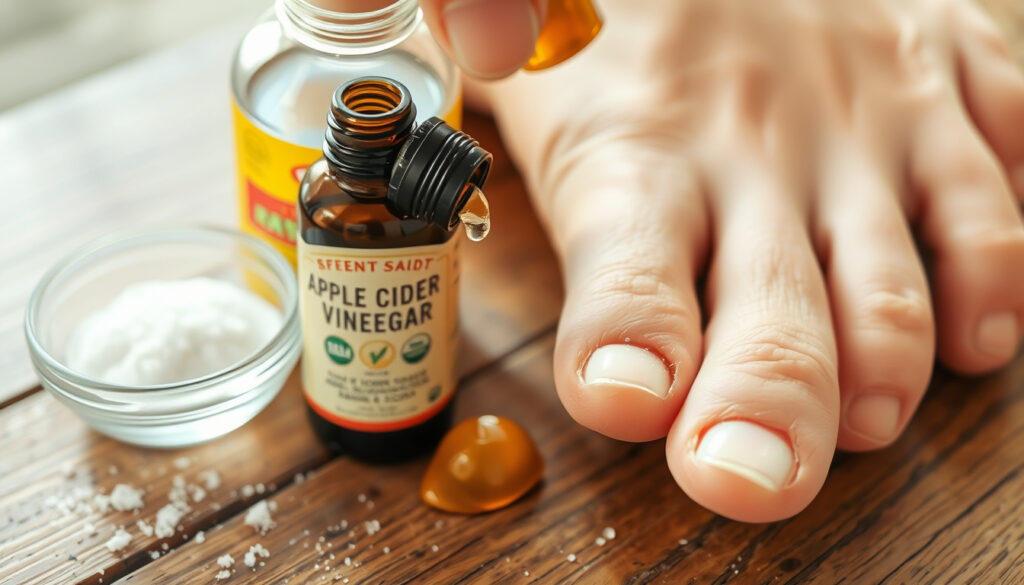
- Apple cider vinegar – Often cited as a home soak, but Healthline reports a lack of strong evidence for efficacy.
- Listerine mouthwash – Popular online, but Healthline says no clinical proof supports its use.
The pattern: these remedies may offer modest antifungal activity, but none can claim instant eradication. The takeaway: if a product promises to kill fungus overnight, treat it with skepticism.
Medical treatments for rapid improvement
- Oral terbinafine – Mayo Clinic considers it the first choice for toenail fungus. It starts working within days, but visible results take 6–12 weeks because the nail must grow out.
- Itraconazole – Another oral antifungal listed by Mayo Clinic, used in pulse dosing. Similar timeline.
- Topical prescription creams – Effective only for superficial cases. Mayo Clinic advises trimming thick nails first to improve penetration.
What this means: the fastest evidence-backed route is oral medication prescribed by a doctor, but even then you’re looking at weeks, not days.
Does Vicks vapor rub help with toenail fungus?
Vicks VapoRub is one of the most talked-about home remedies for toenail fungus. The anecdotal evidence is strong, but what does the science say?
How to apply Vicks for nail fungus
Harvard Health describes a typical method: apply a small amount of Vicks to the affected nail every night, cover with a bandage, and continue for at least 48 weeks. The active ingredients—camphor, eucalyptus oil, and menthol—have antifungal properties.
While the 2011 study showed improvement in 83% of participants, only 28% achieved complete eradication after a full year. That’s not instant, and not a guarantee.
How long does it take to see results?
Most users report noticing cosmetic improvement (less discoloration, smoother texture) after 3–6 months of daily use. Harvard Health warns that even if the nail looks better, the fungus may still be present deep in the nail bed. Recurrence is common.
The trade-off: Vicks may be worth trying as a low-risk, low-cost adjunct, but it cannot replace medical treatment for persistent infections.
What is a good home remedy for toenail fungus?
Many home remedies have been used for generations. Here’s the evidence behind the most popular ones.
Tea tree oil
Mayo Clinic acknowledges that some research shows tea tree oil has antifungal effects. A typical regimen involves applying a few drops directly to the nail twice daily. Healthline notes it may take 6 months or longer to see improvement.
- Dilute with a carrier oil to avoid skin irritation.
- Consistency matters: missing even a few days can stall progress.
Oregano oil
Oregano oil contains thymol and carvacrol, which are antifungal compounds. While promising in lab studies, Healthline states human trials are limited. Use with caution—it can irritate skin and should be diluted.
Apple cider vinegar
Often recommended as a 1:1 water soak, apple cider vinegar is acidic and may create an unfavorable environment for fungus. However, Mayo Clinic notes that evidence for its effectiveness is weak, and it may damage surrounding skin if used improperly.
Listerine mouthwash
Soaking feet in Listerine is a common online tip. The alcohol and essential oils (thymol, eucalyptol, menthol) have antifungal properties, but Healthline emphasizes that no scientific studies confirm its efficacy for nail fungus. It may help as a disinfectant but not a cure.
The implication: home remedies can be supportive, but for true elimination, medical treatment is usually necessary.
What not to eat when you have nail fungus?
Diet is often overlooked in nail fungus treatment. The idea is to starve the fungus by avoiding foods that feed it.
Foods that feed fungus
- Sugar and refined carbs – Fungus thrives on sugar. Amy Myers, MD (functional medicine physician) recommends cutting out sugary drinks, white bread, and pasta to reduce fuel for the fungus.
- Processed foods – High in preservatives and low in nutrients that support immune function.
Diet to starve fungus
- Anti-inflammatory foods – Leafy greens, fatty fish, and nuts can support your body’s defenses.
- Probiotics – Yogurt, kefir, and fermented foods help balance your microbiome.
Why this matters: While diet alone won’t cure an established infection, it can create a body-wide environment where fungus has a harder time spreading. Harvard Health agrees that dietary changes should complement, not replace, medical treatments.
How to know if toenail fungus is dying?
Progress is slow and subtle. These signs can help you track whether treatment is working.
Signs of improvement
- New clear growth at the nail base – The healthy nail starts pushing out the discolored part. Mayo Clinic considers this the most reliable sign.
- Reduction in thickness and discoloration – The nail becomes less yellow or brown and easier to trim.
- Decrease in debris under the nail – Less crumbly material means the fungal load is dropping.
When to see a doctor
If you see no improvement after 3 months of consistent treatment, or if the infection spreads to more nails, consult a podiatrist. Mayo Clinic advises that untreated toenail fungus can lead to pain, permanent nail damage, and secondary bacterial infections, especially in people with diabetes.
The pattern: patience is key—if the nail looks unchanged after 8 weeks, don’t assume treatment has failed; fungus die-off is slow.
Step-by-Step Guide to Treating Toenail Fungus
Following a clear sequence boosts your odds of success. Here’s a proven approach based on Mayo Clinic guidelines.
- Confirm the diagnosis. See a podiatrist to rule out other nail conditions (psoriasis, trauma).
- Trim and thin thick nails. Use nail clippers and a file to reduce thickness, so medication can penetrate deeper.
- Apply topical antifungal. Use an OTC or prescription cream daily after soaking and drying.
- Consider oral medication. For moderate to severe cases, ask about terbinafine or itraconazole.
- Practice strict foot hygiene. Wash feet daily, dry thoroughly between toes, and change socks regularly.
- Disinfect shoes. Use antifungal powder or sprays inside shoes to prevent reinfection.
- Monitor and be patient. Track new nail growth monthly. Full recovery takes 6–12 months.
The implication: no single step guarantees a cure; consistent adherence to the full regimen is what works.
Clarity check: what we know and what’s still uncertain
Confirmed facts
- Oral antifungals like terbinafine are the most effective treatment (Mayo Clinic)
- Topical treatments work for superficial infections (Mayo Clinic)
- Vicks VapoRub has limited evidence and is not a reliable cure (Harvard Health)
What’s unclear
- Whether any single home remedy works instantly (none do, per clinical evidence)
- Effectiveness of dietary changes alone for curing fungus (Harvard Health)
- Long-term recurrence prevention methods still need more research
“Diet alone won’t cure a stubborn fungal infection, but it can absolutely support your immune system and make the environment less hospitable for the fungus.”
“Consistency is the single most important factor. Patients who apply treatment every day without fail see the best results, but they still need to wait months, not days.”
For anyone dealing with toenail fungus, the message is clear: instant cures do not exist. The fastest evidence-backed path involves a doctor-prescribed oral antifungal, combined with consistent topical care and strict foot hygiene. Skip the overnight miracle products—they waste time and money. Commit to a realistic treatment plan, and in most cases you’ll see a healthy new nail within a year.
irvingfootandankle.com, gulfsouthfootandankle.com, youtube.com, uclahealth.org
While many hope for a miracle cure, the medical reality is that nothing kills toenail fungus instantly, but some treatments can speed up recovery significantly.
Frequently asked questions
Is it okay to leave nail fungus untreated?
Not recommended. Mayo Clinic warns that untreated fungus can cause permanent nail deformity, spread to other nails or skin, and increase risk of secondary bacterial infections, especially in people with diabetes.
Can toenail fungus kill you?
Extremely rare for healthy individuals. However, if you have a weakened immune system or diabetes, a severe infection can lead to cellulitis or sepsis. Mayo Clinic advises prompt treatment for at-risk patients.
Does nail fungus live in the nail bed?
Yes. The fungus invades the nail bed (the skin under the nail) and the nail plate. That’s why topical treatments often fail—they can’t reach deep enough. Mayo Clinic explains that oral medication circulates through the bloodstream to reach the nail bed.
Can foot fungus live on bed sheets?
Yes. Fungal spores can survive on fabric, including sheets and towels. Foot and Ankle Centers of South Jersey recommends washing bedding in hot water (140°F) and using antifungal laundry additives to reduce reinfection risk.
What is the simple Japanese trick for nail fungus?
This refers to a traditional practice of soaking feet in diluted vinegar (often rice vinegar) and applying tea tree oil. Healthline notes there is no robust clinical evidence backing this specific method, though the ingredients have some antifungal properties.
How to cure fingernail fungus fast?
Fingernail fungus grows faster than toenail fungus, so treatment may be shorter. Mayo Clinic recommends oral terbinafine as first-line therapy, with visible improvement in 4–8 weeks. Topical options are less effective for fingernails due to slower penetration.
More related posts
 Euro to Australian Dollar Exchange Rate: Live EUR to AUD
 What Causes Tiredness and Fatigue? Warning Signs & Treatments
 Wexford Opera House Events 2026: Tickets, Seating & Dress Code
 Cast of Bookish (TV Series) – Full List of Actors & Characters
 Ring of Kerry Images: Best Photo Stops & Driving Tips
 Mini Golf Near Me in Dublin: Best Indoor & Outdoor Guide
 Signs of Gestational Diabetes: What to Look For
 Puppies for Sale in Ireland: Prices, Breeders & Laws
