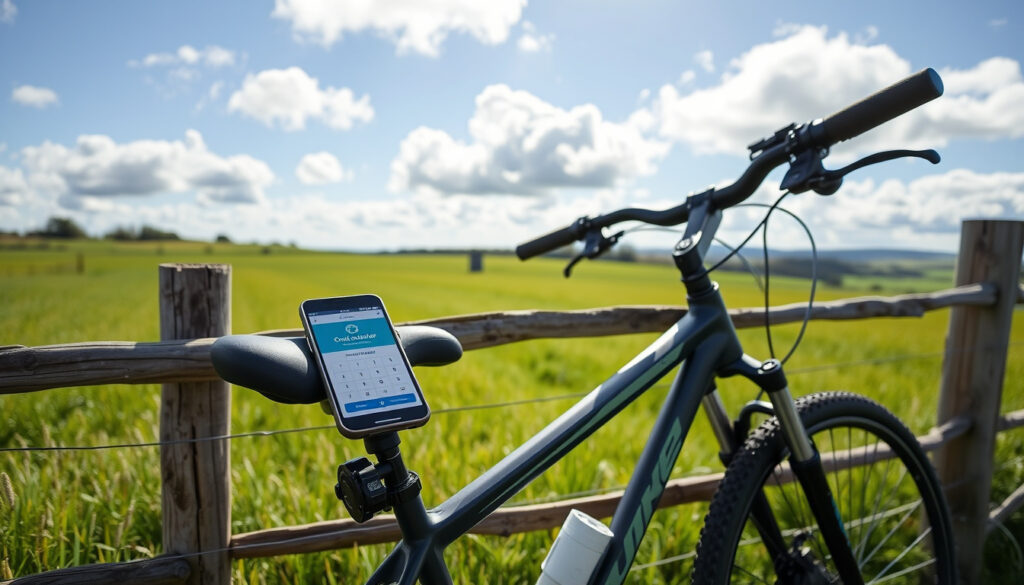
Cycle to Work Scheme Ireland 2026: How It Works, Calculator & Application
If your daily commute is eating into your pay packet and your patience, the Cycle to Work Scheme offers a tax-free shortcut to a better ride. This government-backed benefit lets employees buy a new bike and safety gear through salary sacrifice, cutting the cost by up to 52% for higher-rate taxpayers, and this guide walks you through the rules, savings, and exactly how to apply.
Maximum bike expenditure: €3,000 · Maximum e-bike expenditure: €1,500 · Tax savings: Up to 52% · Scheme usage frequency: Once every 4 years
Quick snapshot
- Maximum bike value is €3,000, e-bikes €1,500 (gov.ie Office of Government Procurement)
- Tax savings range from 26% to 52% depending on your income band (Revenue.ie tax guidance)
- Scheme can be used once every four years (HSE staff guidance)
- Whether HSE and Department of Education employees face additional restrictions beyond standard rules
- Exact budget allocation for public sector schemes in 2026
- Scheme amended as part of July Stimulus Package 2020 (National Shared Services Office)
- HSE public page updated July 2026 – latest guidance in effect (HSE)
- Check if your employer offers the scheme – most public bodies already signed up
- Use the calculator linked below to estimate your net savings before applying
The table below summarises the core numbers.
| Measure | Value |
|---|---|
| Maximum bike spend | €3,000 |
| Maximum e-bike spend | €1,500 |
| Tax savings range | 26% to 52% |
| Scheme frequency | Once every 4 years |
| Repayment period | Up to 12 months |
How do I use the Cycle to Work scheme calculator in Ireland?
The savings calculator is the quickest way to see how much the scheme puts back in your pocket. It factors in your income tax band, USC, and PRSI to give a personalised estimate.
What inputs does the calculator need?
- Your annual gross salary – determines your marginal tax rate (20% or 40%).
- The cost of the bike and any qualifying safety equipment.
- Your employer’s scheme administrator (some use Cyclescheme.ie’s calculator).
Revenue’s official calculator asks for the same inputs. For a higher-rate taxpayer earning over €44,000, the combined income tax, USC, and PRSI savings can reach 52%. According to Citizens Information (state advice service), the repayment is deducted from gross salary, so you save at your marginal rate.
How accurate are the savings estimates?
Calculator accuracy depends on whether your employer applies the salary sacrifice before or after other deductions. The Revenue (Ireland’s tax authority) guidance confirms that repayments are exempt from tax, PRSI, and USC, but the exact saving requires your effective tax rate. Most commercial calculators give a close approximation – within a few euro – but always cross-check with your payroll department.
The implication: your final savings depend on how your employer structures the deduction, so verification with payroll is the only way to get an exact figure.
A higher-rate taxpayer buying a €1,500 e-bike saves about €780 in tax – that’s effectively a half-price e-bike. The calculator turns an abstract benefit into a concrete number.
What are the rules for HSE and Department of Education employees?
Public sector bodies administer the scheme independently, but all follow the same Revenue caps. The real variation is in application windows and eligibility criteria.
Does the scheme apply to all HSE staff?
Yes – the HSE (Ireland’s health service employer) guidance confirms that all employees can apply. You must buy the bike from an approved supplier listed on gov.ie and complete a form via your local coordinator. The scheme runs year-round, but the four-year clock starts ticking from the tax year the bike is provided.
Are there specific limits for public sector workers?
- €3,000 for standard bikes and cargo bikes; €1,500 for e-bikes and pedelecs (gov.ie Office of Government Procurement) (first occurrence retained; later links removed).
- Department of Education staff have a narrower application window: January to October each year (Department of Education FAQ PDF official guidance).
- Teachers, SNAs, clerical officers, caretakers, and childcare workers paid on Education payrolls are eligible. Casual and substitute staff covering leave are not.
The catch: Permanent teachers must have repayments finished by the last October payroll; temporary or fixed-term staff must finish by August. If you change schools mid-year, the scheme may reset.
“The tax year in which the bicycle is provided counts as the first year of use for the four-year rule.”
— Department of Education FAQ (official circular)
The pattern: public sector workers face different administrative calendars, but the financial benefits are identical.
How does the Cycle to Work scheme work in Ireland?
The mechanism is straightforward: your employer buys the bike and you pay it back from your pre-tax salary over up to 12 months.
What is the salary sacrifice mechanism?
- Your employer purchases the bike and equipment from an approved retailer.
- You agree to a salary deduction each pay period until the amount is repaid – typically 12 months.
- Because the repayment is taken from gross salary, you don’t pay income tax, USC, or PRSI on that portion of your earnings (Citizens Information statutory guide).
Who can participate?
Any employee whose employer offers the scheme. Self-employed people are not eligible. Part-time workers qualify on a pro-rata basis – the same per-payslip deduction applies. According to Revenue (tax authority of Ireland), the bike must be used mainly for commuting to work. There is no minimum commute distance.
You save tax now, but your employer deducts the full cost from your salary – meaning your take-home pay falls slightly during the repayment period. Over 12 months, the net effect is positive, but cash flow takes a small hit.
“The scheme can be used once every four years, even if the full €3,000 allowance is not spent.”
— HSE staff benefits page
What this means: the four-year clock starts regardless of how much you spend, so plan your purchases accordingly.
How often can I avail of the Cycle to Work scheme?
Once every four tax years – and the clock starts ticking from the date your employer provides the bike or equipment. The HSE states that “the tax year in which the bike or equipment is bought counts as the first year for the four-year cycle” (HSE guidance).
The Citizens Information (official public service portal) confirms that you cannot have used the scheme within the previous four years. If you switch employers, you may be eligible earlier if the previous loan is fully repaid.
Where can I find the Cycle to Work scheme application form?
There is no single national form – each employer manages its own paperwork. Public sector bodies usually have internal online forms.
Is the form available online?
Yes – most employers provide a digital form. The HSE uses a local coordinator system: you download the form from the HSE intranet, fill in bike details and supplier, and submit it to your local coordinator for approval. The HSE (health service employer) guidance includes a step-by-step application process. Department of Education staff access forms through the circular 0027/2024 link on gov.ie (official government publications).
Do I need my employer’s approval first?
Absolutely – approval must come before you buy. The form requires the employer’s sign-off and details of the bike and safety equipment. Once approved, the employer pays the supplier directly and you start salary deductions. Third-party administrators like Cyclescheme.ie (scheme administrator) handle the transaction for many companies.
How to Apply: Step-by-Step Process
- Check eligibility – confirm your employer offers the scheme. If you’re HSE or Department of Education, review the specific eligibility criteria (permanent vs casual staff).
- Choose a bike and safety equipment from an approved retailer (list on gov.ie).
- Calculate your savings – use the Revenue or Cyclescheme.ie calculator with your salary and bike cost.
- Get employer approval – complete the internal form and submit to your HR or local coordinator.
- Employer pays supplier – once approved, the employer purchases the bike.
- Collect your bike from the retailer.
- Repay via salary deduction – the amount is taken from your gross pay over up to 12 months.
The Citizens Information (state advice service) guide also provides a PDF checklist. Keep copies of all forms and receipts.
What we know for sure – and what’s still open
Confirmed facts
- Maximum bike value of €3,000, e-bike €1,500 – confirmed by gov.ie Office of Government Procurement and Citizens Information.
- Tax savings up to 52% based on marginal rate – Revenue guidance.
- Once every four years – HSE policy and Department of Education FAQ.
What’s unclear
- Whether HSE and Department of Education impose additional restrictions beyond standard rules – no public source confirms extra limits.
- Exact budget for public sector schemes in 2026 – no circular yet.
- The definition of “mainly for commuting” is not precisely quantified by Revenue – interpretations may vary between employers.
“The scheme is tax-free for income tax, PRSI, and Universal Social Charge on the sacrificed remuneration.”
— Department of Education FAQ (official PDF)
What this means for you: The core rules are solid – spend limits, tax exemption, and four-year frequency are confirmed by multiple official sources. The only grey area is whether specific departments add hurdles, but no evidence suggests they do.
hse.ie, citizensinformation.ie, cyclingarchives.com, assets.gov.ie, biketowork.ie, zingy.ie, ie.indeed.com
Frequently asked questions
Can I use the Cycle to Work scheme for a second-hand bike?
No – the scheme only covers new bicycles from approved retailers. Second-hand purchases are not eligible. (Citizens Information)
What happens if I leave my job during the repayment period?
You may need to repay the outstanding balance in a lump sum, or your new employer may allow you to continue deductions. Check your contract. (Revenue guidance)
Do I have to use the bike exclusively for work commuting?
It must be used “mainly” for commuting – meaning the majority of journeys should be to and from work. Occasional leisure rides are fine. (Citizens Information)
Are children’s bikes covered under the scheme?
No – the scheme is for adult employees’ own commuting. Children’s bikes are not included. (Citizens Information)
Can I combine the scheme with other employer benefits?
Yes – the Cycle to Work scheme is separate from the Bike to Work allowance; using it does not affect your right to other salary sacrifice benefits. (Revenue)
What accessories are considered safety equipment?
Helmets, lights, locks, reflective clothing, mudguards, and puncture repair kits typically qualify. Check with your employer’s approved list. (gov.ie OGP)
Is the scheme available to part-time workers?
Yes – part-time employees can participate, with deductions proportional to their pay period. The same tax savings apply. (Citizens Information)
Related reading
- Redundancy Tax Calculator Ireland: Cut Your Tax Bill
- What’s the Minimum Wage in Ireland 2026? Rates & Guide
The scheme is a genuine tax break that can save hundreds of euro on a new bike – but only if you apply within your employer’s window. For HSE staff, that means any time; for Department of Education employees, the deadline is October each year. The choice is clear: use the calculator today, get approval, and start pedalling to work with more money in your pocket.
More related posts
 Things to Do in Dundalk: Top Attractions, Events & Activities
 How Many Faces Does a Cube Have? 6 Faces, 8 Vertices
 Cork 5-Day Weather Forecast: Accuracy Guide
 Half Up Half Down Hairstyles: Easy Tutorials for Beginners
 Euro to Australian Dollar Exchange Rate: Live EUR to AUD
 Ozzy Osbourne Last Concert – Setlist and Black Sabbath Reunion
 Michael Conlan Next Fight: Date, Opponent & How to Watch
 B&Q Ireland Guide: Stores, Delivery & Tips
