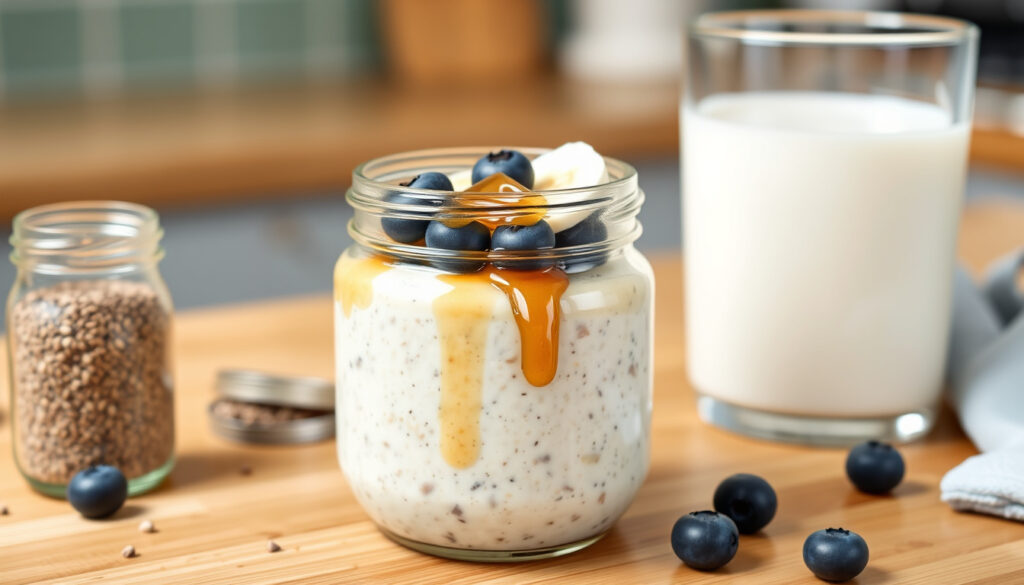
How to Make Overnight Oats: Recipe, Health & Mistakes
Few breakfasts deliver as much payoff for five minutes of effort as a jar of oats you mix the night before. But the difference between a creamy, satisfying meal and a watery, bland disappointment comes down to a few key choices—the type of oats, the ratio of liquid to grain, and what you leave out.
Soak time: 6–8 hours minimum ·
Base ratio: 1 part oats to 1–1.5 parts liquid ·
Serving size: ½ cup dry oats ·
Refrigeration temp: below 40°F (4°C) ·
Calories (base): ~350 per serving
Quick Snapshot
- Overnight oats retain beta-glucan fiber, a soluble fiber linked to lower cholesterol (PMC peer-reviewed study)
- Soaked oats produce a lower glycaemic response than many cooked breakfast cereals (PMC peer-reviewed study)
- Long-term effects of daily raw oat consumption on gut microbiome
- Optimal soaking duration for maximum nutrient availability
- Soak at least 6–8 hours for proper texture; overnight is standard
- Refrigerate below 40°F (4°C) during soaking to inhibit bacterial growth
- Growing interest in diabetic-friendly overnight oats formulations with yogurt and protein (Dietitian Live registered dietitian guidance)
- More research expected on resistant starch formation during refrigeration (Dietitian Live registered dietitian guidance)
Four key metrics, one pattern: the overnight oats formula is a balancing act between texture, blood sugar impact, and convenience.
| Metric | Value | Source |
|---|---|---|
| Soaking time | 6–8 hours minimum | WebMD health editorial board |
| Calories (base serving) | ~350 kcal | Dietitian Live registered dietitian guidance |
| Fiber per serving | 4–6 g | Verywell Health health editorial |
| Preparation time (active) | 5 minutes | WebMD health editorial board |
What Are Overnight Oats?
Overnight oats are raw whole oats soaked in a liquid—typically milk, yogurt, or a plant-based alternative—for several hours until they soften into a creamy, ready-to-eat texture without any cooking. Unlike stovetop oatmeal, the grains absorb liquid cold in the fridge, which changes both the texture and the starch structure.
The key difference from cooked oatmeal: no heat is applied. Soaking relies on time rather than temperature to break down the starches, which preserves more resistant starch and slows digestion—a meaningful difference for blood sugar management.
How do overnight oats differ from cooked oatmeal?
- Texture: Overnight oats are denser and chewier than cooked oatmeal, which becomes soft and porridge-like from heat.
- Starch structure: Cold soaking retains more resistant starch, which may lower the glycaemic response compared to hot-cooked oats, according to research from PMC peer-reviewed nutrition study.
- Convenience: No stove, no boiling, no cleanup—mix and refrigerate.
What is the basic preparation method?
- Combine rolled oats with milk, yogurt, or a plant-based liquid in a jar or bowl.
- Add optional mix-ins such as chia seeds, fruit, nuts, or sweetener.
- Stir, cover, and refrigerate for at least 6–8 hours.
- Serve cold or warm briefly, then add toppings.
What this means: Overnight oats are not just cold oatmeal. The cold-soak method changes the starch profile, which is why they feel different in the mouth and behave differently in the body than a hot bowl of porridge.
Are Overnight Oats Actually Healthy?
The short answer: yes—when prepared thoughtfully. Oats are one of the few whole grains backed by a substantial body of evidence for cardiovascular and metabolic benefits. But the nutritional outcome depends heavily on what else goes into the jar.
What are the health benefits?
- Beta-glucan fiber: Oats are rich in beta-glucan, a viscous soluble fiber that can reduce postprandial blood glucose and insulin responses by delaying carbohydrate absorption, per findings from PMC peer-reviewed nutrition study.
- Cholesterol support: The soluble fiber in oats can help lower blood cholesterol levels, notes WebMD health editorial board.
- Blood sugar regulation: Overnight oats have a low glycemic index due to their high fiber content despite being carbohydrate-rich, reports Verywell Health health editorial.
- Insulin sensitivity: Regular consumption may improve insulin sensitivity and reduce fasting insulin, according to Verywell Health health editorial.
Are there any downsides to eating overnight oats every day?
- Calorie creep: A base serving runs about 350 kcal, but add sweeteners, nut butters, dried fruit, and chocolate, and the same jar can exceed 600 kcal without feeling like a heavy meal.
- Added sugar: Many commercial flavored yogurts and plant milks contain added sugar. Dietitian Live registered dietitian guidance advises choosing plain yogurt and unsweetened milk alternatives to keep sugar in check.
- Phytate content: Oats contain phytic acid, which can reduce mineral absorption. Soaking reduces phytic acid, but the extent varies with time and temperature.
Overnight oats are nutrient-dense but calorie-dense. For someone managing weight, a ½-cup dry serving with yogurt and fruit is a balanced meal. For someone managing blood sugar, skipping the honey and adding nuts or seeds is the difference between a steady glucose line and a spike.
What Is the Formula for Overnight Oats?
The overnight oats formula is refreshingly simple, but small ratio changes produce big texture differences. The standard template is one part dry oats to one to one-and-a-half parts liquid, plus optional thickeners and flavorings.
What is the ideal ratio of oats to liquid?
- Base ratio: 1 part rolled oats to 1–1.5 parts liquid. For a ½-cup serving of dry oats, that means ½ to ¾ cup of milk, yogurt, or a blend of both.
- For a thicker, pudding-like texture: use more yogurt and less milk. Diabetes Canada national health authority publishes a formula of ⅓ cup oats, ¾ cup Greek yogurt, ¼ cup milk—a yogurt-dominant ratio that boosts protein and lowers glycemic load.
- For a thinner, drinkable consistency: increase the liquid to 1.5 parts per part of oats.
What ingredients can you add for flavor and nutrition?
- Protein: Greek yogurt, skyr, cottage cheese, or a scoop of protein powder.
- Fiber and texture: Chia seeds, flax seeds, or hemp hearts. Chia seeds absorb liquid and create a gel-like consistency.
- Natural sweetness: Mashed banana, unsweetened applesauce, berries, or a teaspoon of maple syrup.
- Healthy fats: Walnuts, almonds, peanut butter, or almond butter. Nourish nutrition-focused editorial notes that pairing oats with nuts and healthy fats helps balance slower-digested carbs with fats and fiber.
The Diabetes Canada formula is a standout for anyone concerned about blood sugar: yogurt provides protein and probiotics while reducing the carbohydrate density per spoonful, and the fruit adds fiber without refined sugar.
The catch: The ratio is personal. A 1:1 ratio works for most, but people managing diabetes benefit from tilting the balance toward yogurt and away from sweetened liquids.
How to Make Proper Good Overnight Oats
A proper batch of overnight oats is creamy, flavorful, and holds together without being gluey. The sequence matters more than most recipes admit.
Step-by-step method
- Choose your oats. Use rolled oats (old-fashioned), not instant oats. Instant oats break down too quickly and turn mushy. Steel-cut oats can be used but need more liquid and a longer soak—at least 12 hours.
- Measure the base. Scoop ½ cup of rolled oats into a jar or bowl. This is the standard serving size per Dietitian Live registered dietitian guidance.
- Add liquid and stir. Pour in ½ to ¾ cup of milk, yogurt, or a blend. Stir until every oat grain is submerged. Lumps mean dry pockets that won’t soften.
- Mix in dry additions. Stir in chia seeds, flax, or spices (cinnamon, nutmeg) at this stage so they hydrate evenly.
- Refrigerate. Cover and place in the fridge at or below 40°F (4°C) for at least 6–8 hours. Overnight (10–12 hours) is ideal for the best texture.
- Add toppings after soaking. Fresh fruit, nuts, seeds, and granola go on just before eating. Adding them before soaking makes fruit mushy and nuts soft.
- Serve cold or warm. Overnight oats can be eaten cold straight from the fridge or microwaved for 30–60 seconds if you prefer a warm breakfast.
What are common mistakes to avoid?
- Using instant oats: They disintegrate into a paste. Rolled oats are the sweet spot for texture.
- Skipping the stir: Oats settle at the bottom. Stir halfway through the soak or before serving.
- Over-sweetening: A tablespoon of maple syrup or honey adds about 60 kcal and 15 g of sugar. For everyday eating, rely on fruit for sweetness.
- Ignoring refrigeration: Oats left at room temperature can ferment or grow bacteria. Always refrigerate.
The most common mistake home cooks make is treating overnight oats like cereal—pouring milk over dry oats and forgetting to stir. A good soak requires full contact between liquid and grain; unsoaked oat islands ruin the texture.
What Not to Put in Overnight Oats
Some ingredients sound healthy but sabotage the texture, the safety, or the nutritional profile of overnight oats. Here is what to leave out and why.
Which ingredients spoil texture or safety?
- Citrus juice. Lemon, lime, or orange juice can curdle milk and yogurt during a long soak, producing an unpleasant separated texture.
- Large unsoaked seeds. Whole flax seeds or large chia seeds without enough liquid won’t fully hydrate and can create a gritty mouthfeel.
- Crunchy toppings before soaking. Nuts, granola, and seeds lose their crunch when soaked overnight. Add them just before eating.
- Fresh pineapple or kiwi. These fruits contain enzymes (bromelain and actinidin) that can break down dairy proteins and make the mixture bitter or watery.
What should diabetics avoid?
- Sweetened or flavored yogurts: Many contain 10–15 g of added sugar per serving. Plain Greek yogurt is the safer choice.
- Sweetened plant milks: Vanilla almond milk and oat milk often have added sugar. Unsweetened versions cut empty calories.
- Dried fruit in large amounts: Dates, raisins, and dried cranberries concentrate sugar. A small handful is fine; a quarter-cup adds about 20 g of sugar.
- Honey or maple syrup as daily habit: A teaspoon is reasonable, but multiple tablespoons turn a healthy breakfast into a dessert.
Erin Davis RD registered dietitian notes that steel-cut or large-flake oats have the lowest glycemic index among common oat forms, making them a better choice for blood sugar management—but they require a longer soak.
Many “healthy” overnight oats recipes on social media rely on sweetened yogurt, honey, and dried fruit to taste good. The result can pack 40+ grams of sugar—more than a glazed doughnut. Health is in what you leave out as much as what you add.
Upsides and Downsides
Upsides
- High in beta-glucan fiber for heart health
- Low glycemic impact when prepared with yogurt and minimal sweetener
- No cooking required—prep time is under 5 minutes
- Customizable for most dietary patterns (vegetarian, gluten-free with certified oats)
- Resistant starch formation during refrigeration may improve blood sugar response
Downsides
- Calorie-dense base can lead to overconsumption without awareness
- Added sugar from commercial yogurts and milks is easy to overlook
- Not suitable for people with certain oat sensitivities or celiac (unless certified gluten-free)
- Texture preference varies—some dislike the cold, dense consistency
- Requires advance planning (6–8 hours minimum)
What’s Confirmed and What’s Still Unclear
Confirmed facts
- Overnight oats made with skim milk retain a low glycaemic and insulinaemic impact compared to many cooked cereals (PMC peer-reviewed study)
- Beta-glucan in oats can reduce postprandial blood glucose and insulin responses (PMC peer-reviewed study)
- Overnight oats may improve insulin sensitivity with regular consumption (Verywell Health health editorial)
What’s unclear
- Long-term effects of daily raw oat consumption on gut microbiome diversity
- Optimal soaking duration for maximum nutrient availability
- Whether resistant starch formation during refrigeration is significant enough to meaningfully alter glycemic response in individuals
“Oats are a unique whole grain associated with lower cholesterol, blood pressure, blood sugar, and risk of type 2 diabetes, and improved gut health.”
“Pairing overnight oats with nuts, fruit, flax, chia, milk, or Greek yogurt can help balance slower-digested carbs with fats and fiber.”
“Choosing whole grains, avoiding added sweeteners, and including protein or healthy fats can improve overnight oats for blood sugar control.”
— Dietitian Live registered dietitian guidance
“Steel-cut or large-flake oats have the lowest glycemic index among common oat forms.”
The evidence supports overnight oats as a genuinely healthy breakfast option—when the ingredients are whole and the sugar is controlled. For someone managing type 2 diabetes, the choice is straightforward: use rolled or steel-cut oats, prioritize plain yogurt over sweetened alternatives, and treat honey or maple syrup as an occasional accent rather than a daily staple. For the general cook who wants a quick, fiber-rich breakfast, the formula is forgiving enough that small ratio adjustments won’t ruin the result. The decision is clear: build your jar around whole ingredients, skip the sugar traps, and let time do the cooking. For anyone shopping for ingredients, knowing how many tablespoons in a cup helps with quick adjustments, and planning ahead with a solid grocery list makes the habit stick.
theconsciousplantkitchen.com, inquis.com, reddit.com, healthy.kaiserpermanente.org, reddit.com
For those looking to perfect their base, the perfect overnight oats recipe ratio offers additional tips on achieving the ideal texture.
Frequently asked questions
Can you eat overnight oats warm?
Yes. Overnight oats can be eaten cold or heated in the microwave for 30–60 seconds. Heating does not diminish the nutritional value, though it will soften the texture further.
How long can overnight oats be stored in the fridge?
Overnight oats keep for up to 4–5 days in an airtight container in the refrigerator. Beyond that, texture degrades and bacterial growth risk increases. Always store at or below 40°F (4°C).
Are overnight oats gluten-free?
Oats are naturally gluten-free, but many are cross-contaminated during processing. People with celiac disease or gluten sensitivity should look for certified gluten-free oats.
Can you use steel-cut oats for overnight oats?
Yes, but steel-cut oats require more liquid (1 part oats to 2 parts liquid) and a longer soak of at least 12 hours. They produce a chewier, nuttier texture than rolled oats.
Do overnight oats need to be refrigerated?
Yes. Soaking oats at room temperature creates a risk of bacterial fermentation. Refrigeration at or below 40°F (4°C) keeps them safe and preserves texture.
Can you prepare overnight oats without yogurt?
Absolutely. Use milk, almond milk, oat milk, coconut milk, or any liquid base. The texture will be thinner without yogurt’s thickening effect, so reduce liquid slightly or add chia seeds for body.
How do you sweeten overnight oats naturally?
Mashed banana, unsweetened applesauce, berries, chopped dates, or a drizzle of maple syrup work well. For zero added sugar, rely on ripe fruit and cinnamon for sweetness.
More related posts
 HSE Organ Donation Opt Out: How to Register in Ireland
 What’s the Minimum Wage in Ireland 2026? Rates & Guide
 Things to Do in Dundalk: Top Attractions, Events & Activities
 Minimum Wage for 19-Year-Olds in Ireland 2026: Rates & Guide
 Trump News Now Live: Latest Updates & Press Conference Today
 Ring of Kerry Images: Best Photo Stops & Driving Tips
 Paddy Power Football Today: Odds, Tips & Live Betting
 An Post Savings Account: Rates, Limits, and How to Open
