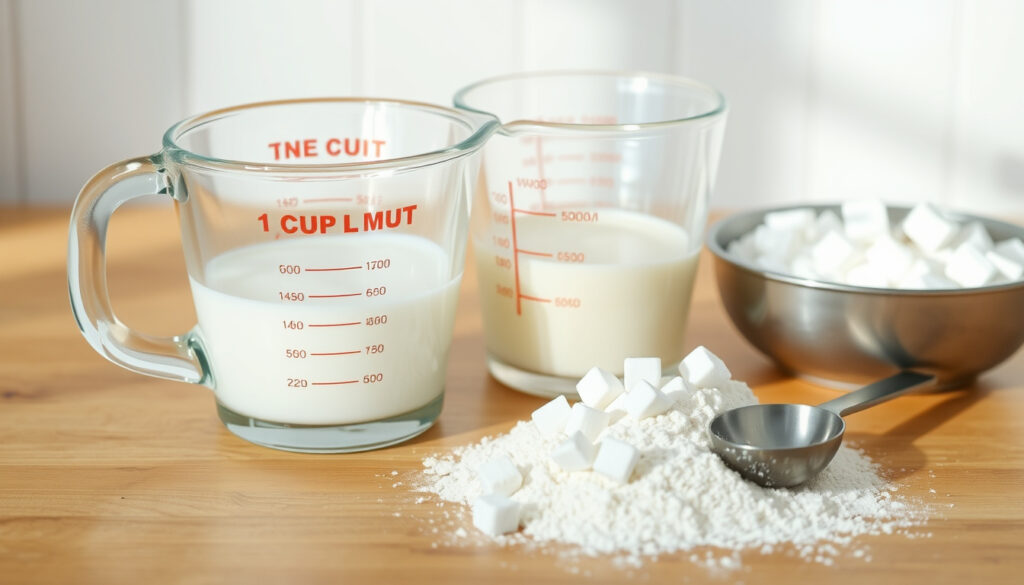
How Many Tablespoons in a Cup? US, UK & Dry vs Liquid
Ever found yourself staring at a recipe that calls for half a cup of flour, only to realize your measuring cup is in the sink and all you have is a tablespoon? The short answer is that 1 US cup holds 16 tablespoons, but the real story involves different cup standards, measuring tools, and a few common conversion pitfalls.
1 cup (US): 16 tablespoons · 1/2 cup: 8 tablespoons · 1/3 cup: 5 tablespoons + 1 teaspoon · 1/4 cup: 4 tablespoons · 3/4 cup: 12 tablespoons
Quick snapshot
- 16 US tablespoons = 1 US cup (USDA ARS)
- 8 US tablespoons = 1/2 US cup (USDA ARS)
- Liquid and dry tablespoons measure the same volume (A Saucy Kitchen)
- Exact conversions between UK imperial cup and US tablespoons depend on rounding convention
- Whether recipe authors intend US or UK cup when writing “cup” without specification
- The volume of a UK tablespoon varies between older (17.7 ml) and modern (15 ml) references
- No active changes to standard cup or tablespoon definitions; USDA conversions remain the authoritative U.S. reference
- More recipes will likely adopt weight-based measurements, reducing cup-to-tablespoon confusion across systems
Five key conversion facts, one pattern: the US cup is 16 tablespoons, but the UK and metric cups differ both in volume and in the tablespoons they contain.
| Measurement | Volume | Source |
|---|---|---|
| US cup volume | 240 ml (8 fl oz) | A Saucy Kitchen |
| US tablespoon volume | 14.79 ml (commonly 15 ml) | Chef in Disguise |
| UK imperial cup volume | 284 ml (10 fl oz) | The English Kitchen |
| UK tablespoon volume | 15 ml | The English Kitchen |
| Metric cup volume | 250 ml | A Saucy Kitchen |
How many tablespoons are in 1 cup?
US standard cup vs metric cup
- The USDA defines 1 US cup as 16 tablespoons and 240 ml (USDA ARS).
- A metric cup (used in Australia, New Zealand, and much of Europe) holds 250 ml, which equals about 16.7 tablespoons if using a 15 ml tablespoon.
Why 16 tablespoons?
The number 16 comes from the fact that 1 US cup equals 8 fluid ounces, and 1 fluid ounce equals 2 tablespoons. Eight times two equals sixteen. This neat relationship makes scaling recipes simple once you know the base ratio.
Bottom line: Home cooks can rely on the 16-tablespoons-per-cup rule for US recipes, but must adjust for metric or imperial cups because the cup size changes.
Does 8 tablespoons equal 1 cup?
8 tablespoons equals half a cup
- The USDA conversion table lists 1/2 cup as 8 tablespoons (USDA ARS).
- 1 cup = 16 tablespoons, so half of that is 8 tablespoons.
Common mistake in recipes
A frequent error is assuming 8 tablespoons equals a full cup, especially when halving or doubling recipes. The pattern: any time a recipe asks for “8 tablespoons,” that’s shorthand for half a cup — not a cup.
Halving a recipe that calls for 1 cup? Use 8 tablespoons. But if you mistakenly use 8 tablespoons for a full cup, you’ll end up with half the intended volume — and a likely baking fail.
The pattern: 8 tablespoons is always half a cup, never a full cup.
What is 1 cup in UK tablespoons?
UK cup size
The UK imperial cup holds 284 ml (10 fl oz), as noted by The English Kitchen.
UK tablespoon size
A UK tablespoon is officially 15 ml, though some older British sources use 17.7 ml. The English Kitchen reports a “British standard tablespoon” of 17.7 ml, but modern UK conversion tables default to 15 ml.
Conversion formula
- 1 UK cup (284 ml) ÷ 15 ml per UK tablespoon = approximately 18.93 UK tablespoons.
- 1 UK cup in US tablespoons: 284 ml ÷ 14.79 ml ≈ 19.2 US tablespoons.
- A metric cup (250 ml) ÷ 15 ml = 16.67 tablespoons.
Two cup systems, one pattern: the table below shows how the same volume of a cup translates into tablespoons differently depending on where you are.
| Cup system | Cup volume | Tablespoons (15 ml tbsp) | Source |
|---|---|---|---|
| US (legal) | 240 ml | 16 | USDA ARS |
| UK imperial | 284 ml | ≈ 18.93 | The English Kitchen |
| Metric | 250 ml | ≈ 16.67 | A Saucy Kitchen |
The implication: a recipe that says “1 cup” can mean 16, 18.9, or 16.7 tablespoons depending on which cup the author had in mind. When following a non-US recipe, check whether it uses imperial or metric cups.
Is a liquid tablespoon the same as a dry tablespoon?
Volume vs weight discrepancy
- Both liquid and dry tablespoons are designed to hold the same volume — 14.79 ml in the US (Chef in Disguise).
- Dry measuring cups are meant to be leveled off with a straight edge; liquid cups have a spout and are filled to the line.
Why dry measuring cups are not interchangeable
Though their volume is identical, using a liquid cup for dry ingredients makes it nearly impossible to level off, leading to packed or uneven amounts. America’s Test Kitchen has long recommended using the correct tool for each ingredient to ensure accuracy.
A packed cup of flour can contain 25% more flour by weight than a properly leveled cup. That difference can turn a tender cake into a dry brick. Volume holds constant, but the tool shapes how much air is trapped.
What this means: using the correct measuring tool is as important as knowing the conversion itself.
How many tablespoons in a 1/4 cup?
1/4 cup = 4 tablespoons
- The USDA states 1/4 cup equals 4 tablespoons (USDA ARS).
1/3 cup = 5 tbsp + 1 tsp
- Since 1/3 of 16 tablespoons is 5.33, the standard conversion uses 5 tablespoons plus 1 teaspoon (since 1 teaspoon = 1/3 tablespoon).
1/2 cup = 8 tbsp
- As confirmed by USDA: 8 tablespoons = 1/2 cup.
3/4 cup = 12 tbsp
- USDA lists 3/4 cup as 12 tablespoons (USDA ARS).
Bottom line: Bakers can compute any fraction by remembering 1 cup = 16 tablespoons, then multiplying; no need to memorize each fraction.
How to Measure 1 Cup Accurately
- Choose the right cup: dry measuring cups for flour, sugar, oats; liquid measuring cup for water, milk, oil.
- Spoon dry ingredients into the cup (don’t scoop directly from the bag — that packs it).
- Level off the top with a straight edge (back of a knife or spatula).
- For liquids, place the cup on a flat surface, pour, and read at eye level.
- Convert to tablespoons as needed: 1 cup = 16 tbsp; use a tablespoon measure for small amounts.
The pattern: accuracy comes from the right tool and technique, not just the conversion number.
Clarity check: what we know and what remains uncertain
Confirmed facts
- 16 US tablespoons = 1 US cup (USDA ARS)
- 8 US tablespoons = 1/2 US cup (USDA ARS)
- Liquid and dry tablespoons measure the same volume (A Saucy Kitchen)
What’s unclear
- Exact conversions between UK imperial cup and US tablespoons depend on rounding convention
- Whether recipe authors intend US or UK cup when writing “cup” without specification
- The volume of a UK tablespoon varies between older (17.7 ml) and modern (15 ml) references
The catch: even with precise numbers, recipe ambiguity can still cause confusion.
Expert perspectives on cup and tablespoon measurements
“Use dry measuring cups for dry ingredients and liquid measuring cups for liquids. They hold the same volume, but the design matters for accuracy.”
— America’s Test Kitchen (recognized authority in cooking techniques)
“The USDA conversion tables provide the official U.S. standard: 1 cup equals 16 tablespoons, and 1 tablespoon equals 3 teaspoons.”
— USDA ARS (federal nutrition research agency)
“A British standard tablespoon is 17.7 ml, while an American tablespoon is 14.2 ml — that adds up when you’re scaling a recipe.”
— The English Kitchen (British cooking reference)
For home cooks in the US, the choice is straightforward: stick with the 16-tablespoons-per-cup rule and use the correct measuring tool for dry versus liquid ingredients. For anyone following international recipes, the clear action is to identify which cup system the recipe uses — US, imperial, or metric — and convert accordingly. Bakers and bakers-to-be who ignore the difference risk ending up with a pancake instead of a soufflé.
For a more detailed breakdown of tablespoon-to-cup ratios, see this complete conversion guide that includes a handy chart for quick reference.
Frequently asked questions
How many teaspoons are in a tablespoon?
1 tablespoon equals 3 teaspoons. This is standard in both US and UK systems.
Is 1 cup equal to 250 ml?
Not in the US. A US cup is 240 ml. A metric cup (used in Australia and much of Europe) is 250 ml. For more on planning your kitchen, see How to Make a Grocery List.
How many tablespoons are in a metric cup?
A metric cup (250 ml) contains about 16.67 tablespoons if using a 15 ml tablespoon.
How many tablespoons are in a stick of butter?
One US stick of butter is 1/2 cup, which equals 8 tablespoons.
How do I convert tablespoons to grams?
It depends on the ingredient. For water, 1 tablespoon ≈ 15 grams. For flour, about 8 grams per tablespoon. Use a weight conversion chart for accuracy.
What is the difference between a tablespoon and a dessert spoon?
A dessert spoon is smaller — roughly 10 ml — while a tablespoon is 15 ml. Recipes rarely use dessert spoons in US cooking.
For further reading on healthy eating habits, check out Lose Weight Fast Naturally and Permanently: Science Guide.
More related posts
 When Does Lent Start 2026? Ash Wednesday Date
 Newcastle United vs Man City Timeline: Key Results & History
 How to Spot a Phishing Email: Top Red Flags and Prevention
 Blood in Urine Female: Causes, When to Worry, and Treatment
 Best Robot Vacuum and Mop 2026: Top Picks and Buying Guide
 Let It Be Lyrics: Meaning, Origin & Mother Mary Story
 Limerick to Dublin Airport Bus: Timetables, Operators & Prices
 Fast Horse Racing Results Today – Live Updates
