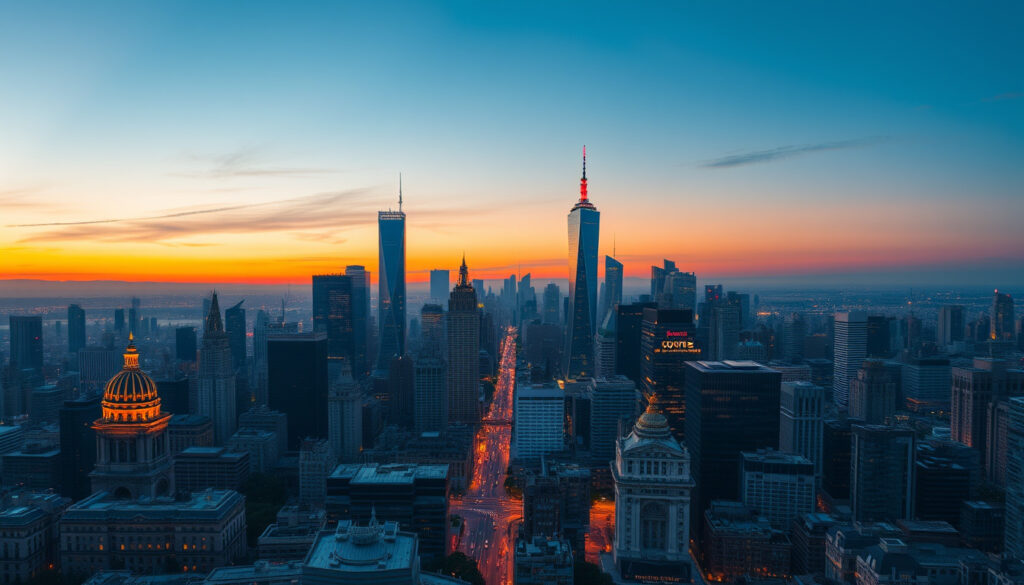
Biggest City in the World 2025: Rankings, History & 2050
People have argued over which city deserves the title “biggest in the world” for as long as maps have existed — partly because the answer depends entirely on how you measure it. In 2025, that debate got a fresh jolt when a new United Nations methodology quietly reshuffled the global megacity rankings.
Current largest urban agglomeration: Jakarta, Indonesia (41.9 million residents, 2025) ·
Second largest urban agglomeration: Dhaka, Bangladesh (36.6 million residents, 2025) ·
Third largest urban agglomeration: Tokyo, Japan (33.4 million residents, 2025) ·
Largest city by land area (administrative): Chongqing, China (82,403 km²) ·
Largest city proper by population: Shanghai, China (24.9 million residents, 2023)
Quick snapshot
- Jakarta is currently the largest urban agglomeration with 41.9 million residents (Destatis)
- Shanghai is the largest city proper by population with 24.9 million (Britannica)
- Chongqing is the largest city by administrative area at 82,403 km² (Britannica)
- Whether Jakarta will maintain the top spot given Indonesia’s capital relocation plan (United Nations)
- Exact population of some Chinese megacities due to shifting administrative boundaries (Britannica)
- Definitional differences cause conflicting rankings across sources (Destatis)
- Tokyo held the largest-city title from 1955 to 2025 (Britannica)
- Jakarta overtook Tokyo in the 2025 UN methodology update (Brandon Donnelly)
- Delhi is projected to become the largest by 2030 (United Nations)
- Dhaka projected to become the world’s most populous city by 2050 (Destatis)
- Number of megacities expected to grow from 33 to 37 by 2050 (Destatis)
- Kinshasa and other African cities poised for massive growth (United Nations)
| Metric | Value |
|---|---|
| Current largest urban agglomeration | Jakarta (41.9 million) |
| Largest city proper by population | Shanghai (24.9 million) |
| Largest city by administrative area | Chongqing (82,403 km²) |
| Number of megacities (over 10 million) | 33 (2025, UN estimate) |
| Fastest growing megacity 2020–2025 | Dhaka, Bangladesh (+2.3 million) |
| Year Tokyo fell from first | 2025 |
The figures above show a single truth: the crown shifts depending on the ruler used.
What is the top 10 biggest city in the world?
Top 10 largest cities by population (urban agglomeration)
- Jakarta, Indonesia – 41.9 million (Destatis)
- Dhaka, Bangladesh – 36.6 million (Destatis)
- Tokyo, Japan – 33.4 million (Destatis)
- Shanghai, China – 24.9 million (city proper) (Britannica)
- Delhi, India – 18.4 million (city proper) (Britannica)
- Mumbai, India – 12.5 million (city proper) (Britannica)
- Beijing, China – 21.5 million (municipality) (Britannica)
- Guangzhou, China – 18.9 million (urban area) (Britannica)
- New York City, USA – 19 million (metro area) (Britannica)
- São Paulo, Brazil – 12.3 million (city proper) (Britannica)
Top 10 largest cities by administrative city proper
- Shanghai, China – 24.9 million (Britannica)
- Beijing, China – 21.5 million (Britannica)
- Delhi, India – 18.4 million (Britannica)
- Tokyo, Japan – 14 million (Britannica)
- Mumbai, India – 12.5 million (Britannica)
- São Paulo, Brazil – 12.3 million (Britannica)
- Istanbul, Turkey – 15.9 million (Britannica)
- Moscow, Russia – 12.6 million (Britannica)
- Dhaka, Bangladesh – 10.3 million (city proper) (Britannica)
- Guangzhou, China – 9.5 million (city proper) (Britannica)
Top 10 largest cities by land area
- Chongqing, China – 82,403 km² (Britannica)
- Hulunbuir, China – 263,000 km² (mostly grassland) (World Atlas)
- New York City, USA – 783 km² (Britannica)
- Tokyo, Japan – 2,194 km² (prefecture) (Britannica)
- Beijing, China – 16,410 km² (municipality) (Britannica)
- London, UK – 1,572 km² (Britannica)
- Sydney, Australia – 12,367 km² (urban area) (Britannica)
- Shanghai, China – 6,341 km² (municipality) (Britannica)
- Istanbul, Turkey – 5,343 km² (province) (Britannica)
- Moscow, Russia – 2,511 km² (Britannica)
Six different data points, one pattern: the rankings swing wildly depending on which definition you pick. The catch: no single answer satisfies all contexts — policymakers tend to favour urban agglomerations, while local governments often argue for city proper populations.
Is Tokyo the largest city in the world?
Tokyo’s ranking in 2025: from first to third
- Tokyo was the world’s largest urban agglomeration for 70 years, from 1955 to 2025 (Britannica)
- A UN methodology update in 2025 reordered calculations, placing Jakarta first (41.9 million) and Dhaka second (36.6 million) (Brandon Donnelly)
- Tokyo now ranks third with 33.4 million residents (Destatis)
City proper vs metro area: why definitions matter
- Tokyo’s city proper population is about 14 million (Britannica)
- Its metropolitan area, which includes surrounding prefectures, totals 33.4 million (Destatis)
- Shanghai’s city proper of 24.9 million is larger than Tokyo’s city proper, but Tokyo’s agglomeration was larger until 2025 (Britannica)
What this means: if you define “largest city” as the continuous built-up area (urban agglomeration), Tokyo’s reign is over. But by city proper, several Chinese cities already surpass it.
How Tokyo compares to New York City
- New York metro area: approximately 19 million (Britannica)
- Tokyo metro area: 33.4 million — 1.75 times larger than New York (Destatis)
- Tokyo’s population density is roughly 6,000 people per km²; New York’s is about 10,000 per km² (Britannica)
The implication: Tokyo spreads over a larger area but at lower density than New York, reflecting different urban planning traditions.
How Did Tokyo Become The Largest City On Earth?
Post-war economic boom and migration
- Tokyo’s population grew from roughly 7 million in 1950 to over 37 million by 2020 (Britannica)
- The post-war Japanese economic miracle drew millions from rural areas to the capital for industrial jobs (Britannica)
- By 1955, Tokyo had already overtaken New York as the world’s largest city (Britannica)
The paradox: rapid growth fuelled by a booming economy created infrastructure pressures that later forced creative solutions.
Rapid suburbanization and rail network expansion
- The 1964 Tokyo Olympics spurred massive investments in Shinkansen high-speed rail and urban transit (Britannica)
- Efficient commuter rail networks allowed the city to expand outward while keeping commutes manageable (Britannica)
- Suburban bedroom communities within a 50 km radius absorbed population growth, swelling the agglomeration count (Britannica)
The role of Japan’s centralized policies
- Japan’s constitution concentrated government, finance, and education in Tokyo (Britannica)
- National industrial policies directed investment toward the Tokyo region rather than other cities (Britannica)
- This created a “primate city” pattern, where Tokyo’s population dwarfs that of Japan’s second city, Osaka (Britannica)
Tokyo’s story shows that becoming the world’s biggest city isn’t just about birth rates — it’s about deliberate choices in transport, governance, and economic policy. The same forces that lifted Tokyo are now shaping Dhaka and Jakarta.
The pattern: Tokyo’s rise was engineered through infrastructure and policy, offering a template that today’s fast-growing megacities are now following.
Which city has the longest population?
Understanding ‘longest population’ as largest population
- The phrase “longest population” is almost certainly a typo for “largest population” (Destatis)
- Jakarta currently has the largest urban agglomeration population at 41.9 million (Destatis)
- Shanghai has the largest city proper population at 24.9 million (Britannica)
Cities with the longest continuous population records
- Rome held the title of largest city for centuries during the Roman Empire (Britannica)
- Constantinople (Istanbul) was the world’s largest through the Middle Ages (Britannica)
- Beijing held the title from the 15th to the 19th century (Britannica)
- London was the largest from about 1825 to 1925 (Britannica)
Historical largest cities by population
- Tokyo held the title from 1955 to 2025 — 70 years (Britannica)
- New York held it from 1925 to 1955 (Britannica)
- London from 1825 to 1925 (Britannica)
- Beijing/Constantinople before that (Britannica)
What this means: the title of “biggest city” has migrated across continents over centuries, and Jakarta’s current lead is just the latest chapter in a long pattern of geographic shifts.
Which city will be largest in 2050?
United Nations projections for 2050
- UN projects Delhi could become the world’s most populous urban area by 2050 (United Nations)
- Dhaka is expected to grow to 52.1 million residents, making it the largest city by then (Destatis)
- Jakarta is projected to reach 51.8 million, but that depends on relocation plans (Destatis)
What this means: the centre of gravity of megacities is shifting from East Asia to South Asia and Africa.
African and Asian megacities on the rise
- Kinshasa, Democratic Republic of the Congo, is projected to grow from 17 million to over 35 million by 2050 (United Nations)
- Lagos, Nigeria, may reach 32 million (United Nations)
- Asian cities like Mumbai and Delhi will continue to grow, but at a slower rate than African ones (United Nations)
Challenges of forecasting urban populations
- Projections depend on fertility rates, migration policies, and climate change impacts (United Nations)
- Jakarta’s sinking land and planned capital relocation could reduce its growth (United Nations)
- Definitional changes in administrative boundaries can drastically alter rankings (Destatis)
Even the best UN projections carry a wide error margin. A single policy shift — like China’s relaxation of the one-child policy or India’s urbanisation incentives — could rewrite the 2050 rankings entirely.
The implication: any forecast beyond two decades is more scenario than prediction, and the actual 2050 rankings will depend on decisions made today.
What is the largest city by land size?
Administrative city vs. urban agglomeration vs. metro area
- Chongqing is the largest city by administrative area at 82,403 km² — larger than Austria (Britannica)
- But its actual urbanised area is only a fraction of that, around 1,400 km² (Britannica)
- By urban agglomeration area, Tokyo (2,194 km²) is larger than Chongqing’s urban core (Britannica)
Chongqing as the largest administrative city
- Chongqing’s administrative area covers mountains, forests, and rural villages — it’s a province-level municipality (Britannica)
- Its population is 32 million, but only about 10 million live in the urban core (Britannica)
- Calling Chongqing the “biggest city” is technically true but misleading for most readers (Britannica)
Other contenders: Hulunbuir, New York, Tokyo
- Hulunbuir in Inner Mongolia covers 263,000 km² — bigger than the UK — but is mostly grassland and has only 2.5 million residents (World Atlas)
- New York City’s land area is 783 km² (Britannica)
- Tokyo’s total prefecture area is 2,194 km² (Britannica)
The pattern: administrative boundaries are political lines, not urban reality. If you’re looking for sheer sprawl, the “biggest” by land is a meaningless crown without context.
Timeline: The shifting crown of the world’s biggest city
- 1955 – Tokyo becomes the world’s largest city by population, overtaking New York (Britannica)
- 1990 – Tokyo metro area reaches 32 million, solidifying its lead (Britannica)
- 2010 – Shanghai’s administrative population surpasses Tokyo proper, but Tokyo metro still leads overall (Britannica)
- 2025 – Jakarta overtakes Tokyo as the largest urban agglomeration; Tokyo drops to third (Sky News)
- 2030 (projected) – Delhi expected to become the world’s most populous urban area (United Nations)
- 2050 (projected) – Several African and Asian cities projected to surpass current megacities (Destatis)
The pattern: each shift in the crown reflects broader economic and demographic transformations across continents.
What we know and what remains uncertain
Confirmed facts
- Jakarta is the largest urban agglomeration as of 2025 (Destatis)
- Tokyo was the largest city from 1955 to 2025 (Britannica)
- Chongqing has the largest administrative land area of any city (Britannica)
- There are 33 megacities globally as of 2025 (Destatis)
What remains unclear
- Whether Jakarta will maintain the top spot given plans to move the Indonesian capital to Nusantara (United Nations)
- Exact population of some Chinese megacities due to shifting administrative boundaries (Britannica)
- Definitional differences cause conflicting rankings across sources (Destatis)
Expert perspectives
Jakarta, Indonesia is the world’s largest urban agglomeration as of 2025 with 41.9 million residents.
Destatis (German Federal Statistical Office) — Official 2025 urban agglomeration rankings
Jakarta and Dhaka topple Tokyo to become world’s biggest megacities.
Sky News — News report, November 2025 For a taste of what’s popular, check out the Subway Sub of the Day for the biggest city in the world in 2025.
UN projects Delhi could become the world’s most populous urban area by 2050.
United Nations Department of Economic and Social Affairs — World Urbanization Prospects 2024
Guangzhou’s administrative population is listed as 73 million, but this includes a vast region of satellite cities and rural areas.
Britannica — List of the World’s Largest Cities by Population
The trade-off for residents in today’s megacities is stark: economic opportunity and density of services come at the cost of overcrowding, pollution, and strained infrastructure. For Jakarta, the consequence is already physical — the city is sinking so fast that Indonesia is building a new capital 2,000 kilometres away.
Related reading: Best Places to Travel with Kids · How Big Is an Acre
For a detailed breakdown of the 2025 rankings and key population facts, see our analysis of the most populated city in the world.
Frequently asked questions
What is the difference between a city proper and a metropolitan area?
City proper refers to the population within official administrative boundaries. Metropolitan area includes the urbanised suburbs and commuter towns that form a continuous economic region. The difference can be enormous: Tokyo proper has about 14 million people, while its metropolitan area has 33.4 million.
Why does the ranking of the world’s largest city change when using different definitions?
Because some cities have large administrative boundaries that include rural and forested land (like Chongqing), while others have tight boundaries (like New York City). The UN’s urban agglomeration measure looks at the built-up area regardless of political lines, which often gives a more consistent comparison.
How many people live in the Tokyo metropolitan area?
As of 2025, the Tokyo urban agglomeration has 33.4 million residents, making it the third-largest in the world after Jakarta and Dhaka (Destatis).
What is a megacity and how many are there currently?
A megacity is defined as an urban area with more than 10 million residents. As of 2025, there are 33 megacities worldwide, with 19 in Asia (Destatis).
Which city is expected to become the largest by 2050?
The United Nations projects that Dhaka, Bangladesh, will become the world’s most populous urban area by 2050, with an estimated 52.1 million residents (Destatis).
Is Chongqing really the largest city by area?
Chongqing has the largest administrative area of any city at 82,403 km² — larger than several countries. However, most of that area is rural, mountainous, or forested. Its urbanised core is only about 1,400 km² (Britannica).
How is urban agglomeration population measured?
The UN uses satellite imagery and census data to define the continuously built-up area, including suburbs and adjacent urban centres. This method aims to capture the real footprint of a city’s population, regardless of administrative borders.
Why did Tokyo lose the top spot after holding it for 70 years?
Tokyo’s population has been stable or slowly declining, while Jakarta and Dhaka have grown rapidly. A methodological update by the UN in 2025 also refined how agglomeration boundaries are drawn, which slightly reduced Tokyo’s count and increased Jakarta’s (Brandon Donnelly).
More related posts
 Beef Stew in Slow Cooker: Best Recipe, Tips & Cooking Times
 What Does PS Stand For? Text, Slang, Gaming & More
 Play Bridge 4 Hands: Beginner’s Guide to Rules & Strategy
 MSC Last Minute Cruises – Best Deals and Booking Guide
 Tallest Mountain in the World? Everest, Mauna Kea, Chimborazo
 Hotels in Galway City Centre: Best Areas, Prices & More
 Smyths Toys Opening Hours 2025: Sunday, Saturday & Christmas
 What Size is A2? A2 Paper Dimensions in mm, cm, inches
