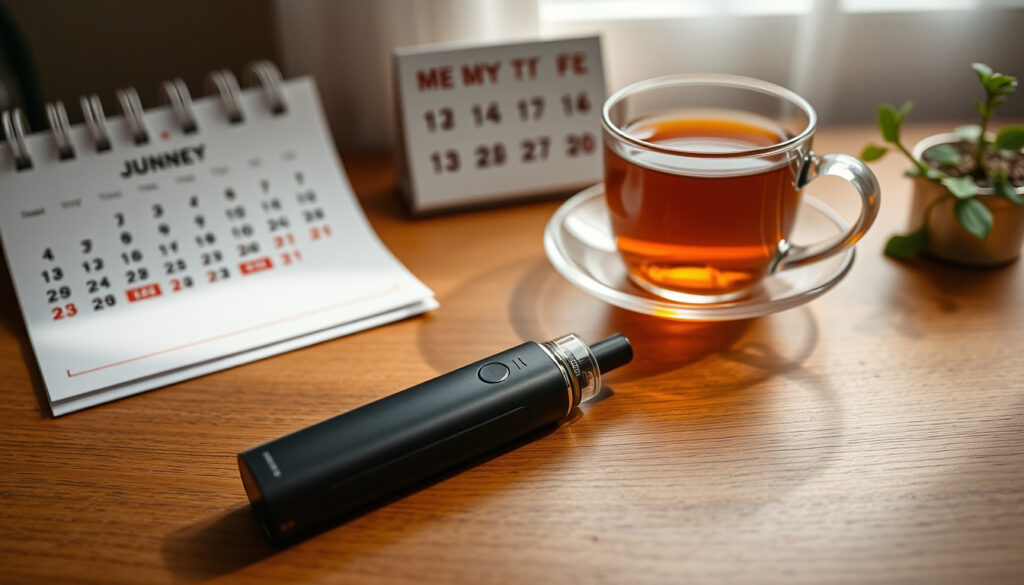
How to Stop Vaping: Withdrawal Timeline, Tips, and Natural Methods
If you’ve ever tried to quit vaping, you already know the hardest part isn’t the decision—it’s the first 72 hours, when nicotine leaves your system and your brain throws a tantrum. This guide walks you through a practical, evidence-based plan to stop vaping, covering the withdrawal timeline, natural coping strategies, and exactly what happens to your lungs once you stop.
U.S. high school students who vape: 1 in 10 (CDC 2023) ·
Nicotine withdrawal peak: Day 3 after quitting ·
Nicotine out of blood: 72 hours after last use ·
Lung recovery begins: Weeks after quitting ·
Quit attempts before success: 8 to 11 on average
Quick snapshot
- Nicotine withdrawal peaks 3–7 days after quitting (Truth Initiative (youth tobacco prevention group))
- Nicotine replacement therapy increases quit success (NHS (UK health authority))
- Eliminating triggers improves success rates (American Heart Association (cardiac health guidelines))
- Exercise reduces cravings short-term (Opus Treatment (addiction recovery resource))
- Exact lung recovery timeline for chronic vapers
- Long-term effects of vaping on lung function beyond 5 years
- Comparative effectiveness of cold turkey vs. gradual reduction for vaping specifically
- 20 minutes: heart rate drops to normal (CDC (U.S. public health agency))
- 48–72 hours: nicotine leaves blood, withdrawal peaks (Allen Carr (smoking cessation resource))
- 2–4 weeks: lung function improves, circulation normalizes (Mass General Brigham (respiratory medicine research))
- 1 year: lung function significantly improved (HSE (Ireland’s public health service))
- Choose a quit date within 7 days (American Heart Association)
- Consider NRT or gradual reduction (NHS)
- Use apps like QuitSTART for support (American Heart Association)
- Tell friends and family for accountability (American Heart Association)
Five key figures show the landscape of vaping cessation, from teen prevalence to recovery potential.
| Fact | Value |
|---|---|
| Vaping among U.S. teens (2023) | 10% of high school students report current use (CDC (U.S. public health agency)) |
| Nicotine addiction rate | 90% of vapers use nicotine-containing products |
| Successful quit rate with NRT | Up to 50% higher than cold turkey (NHS) |
| Withdrawal duration | Peak symptoms last 3–7 days (Cleveland Clinic) |
| Lung recovery potential | Complete recovery possible for short-term users |
What is the best way to stop vaping?
The most effective quit plans combine a firm quit date with a strategy for managing withdrawal, not just willpower alone.
- Set a quit date within 7 days.
- Make a quit plan (cold turkey or gradual reduction).
- Remove all vaping equipment.
- Tell friends and family for support.
The research points to a structured approach. According to the American Heart Association (cardiac health guidelines), choosing a quit date within the next seven days increases success by 50% compared to an open-ended plan. You then make a pledge in front of supporters, remove all vaping equipment, and prepare for the first week.
Set a quit date
- Pick a day within 7 days — not “someday.” The American Heart Association calls this your “Quit Day.”
- Write it down and tell someone who will hold you accountable.
Make a quit plan
- The NHS (UK health authority) recommends either cold turkey (stop all at once) or gradual reduction (lower nicotine strength, stretch intervals between puffs).
- Create vape-free zones — no vaping at work, in the car, or in certain rooms at home.
Remove all vaping equipment
- Throw away devices, pods, e-liquids, chargers — anything that triggers the hand-to-mouth habit.
- Don’t keep a “just in case” backup.
Tell friends and family
- Public commitment raises success rates. The American Heart Association advises making a pledge in front of people who support you.
- Let them know what to expect — irritability, cravings, and the need for distraction.
The pattern: People who treat quitting as a planned event, not a spontaneous decision, are far more likely to stay vape-free after the first month. Structure beats willpower every time.
How long will vape withdrawal last?
Knowing exactly when withdrawal peaks removes the fear of the unknown — and that fear is a major relapse trigger.
Nicotine withdrawal follows a predictable clock. The Cleveland Clinic (medical research center) states symptoms peak on the second or third day of being nicotine-free and fade over three to four weeks. Here’s what that looks like hour by hour.
Nicotine withdrawal timeline
| Time after quitting | What happens |
|---|---|
| 6–12 hours | Nicotine leaves system; nervousness and agitation begin (Opus Treatment) |
| 24–48 hours | Most nicotine clears blood; irritability and headaches emerge (Allen Carr (smoking cessation resource)) |
| Day 3 | Withdrawal peaks — strongest cravings, insomnia, anxiety (Cleveland Clinic) |
| 1–2 weeks | Cravings fade; physical symptoms decline (Opus Treatment) |
| 3–4 weeks | Most physical withdrawal ends; psychological cravings may persist (Allen Carr) |
Days 1–3: peak cravings
- Your brain, starved of nicotine, triggers intense urges. The Opus Treatment notes that day 3 is the worst.
- Plan distractions in advance: a walk, a call to a friend, a cold drink.
Weeks 2–4: symptoms decline
- Physical symptoms like headaches and irritability fade.
- Some people report lingering brain fog or mood swings for a few months (Allen Carr).
The catch: The psychological habit of reaching for a vape often outlasts the physical withdrawal. That’s why replacement activities matter long after nicotine leaves your body.
What can I replace vaping with?
Replacing vaping with a healthier habit is essential, but the wrong replacement (like snacking on junk) can create a new problem.
Replacement strategies fall into three categories: nicotine substitutes, oral substitutes, and behavioral distractions. The NHS (UK health authority) says NRT doubles quit success rates. For those avoiding nicotine, exercise and fidget tools work well.
Nicotine patches and gum
- Over-the-counter patches and gum deliver controlled doses of nicotine without the harmful chemicals in vapor. The NHS recommends them as first-line aids.
- Use as directed — don’t chew gum while wearing a patch.
Fidget toys and stress balls
- The hand-to-mouth ritual is half the addiction. Fidget spinners, stress balls, or even a pen to click can satisfy that urge.
- NSW Health (Australia state health authority) suggests keeping your hands busy with anything other than a vape.
Exercise and physical activity
- A brisk walk or 10 minutes of jumping jacks can reduce cravings by 20–30% according to Opus Treatment.
- Exercise releases dopamine — the same neurotransmitter nicotine hijacks — but in a healthy way.
Chewing sugar-free gum
- Oral substitutes like gum, mints, or toothpicks keep your mouth occupied without calories or nicotine.
- The NSW Health (Australia state health authority) notes that young vapers often find gum the easiest swap.
The implication: There’s no single magic replacement; the best strategy is to have two or three alternatives ready for different settings (home, work, social).
Why is day 3 the hardest when quitting vaping?
Day 3 is both the peak of suffering and the signal that your body is already free of nicotine — a brutal but necessary milestone.
By 72 hours after your last puff, nicotine has fully left your bloodstream. The Allen Carr (smoking cessation resource) confirms that after 48 hours most nicotine is gone, and after three weeks no traces remain. But the brain’s receptors, still craving the substance, fire off intense signals.
- Nicotine half-life is 2 hours; after 72 hours the body is clean (Cleveland Clinic).
- Withdrawal includes anxiety, irritability, insomnia, and difficulty concentrating (Opus Treatment).
- Psychological triggers — a coffee break, finishing a meal, driving the car — amplify the craving.
What this means: Day 3 is not a sign of failure — it’s the biological peak of withdrawal. Surviving that day dramatically increases the chance of long-term success.
Can your lungs 100% recover from vaping?
While short-term vapers often see full recovery, chronic users may carry lasting inflammation — the data beyond five years is still thin.
Lung recovery depends on duration and frequency of vaping. For young people who vaped for a year or two, the outlook is positive. The CDC (U.S. public health agency) states that lung function begins improving within weeks of quitting, and cilia (the tiny hairs that clean mucus) start repairing almost immediately.
Short-term lung recovery
- Within 2 weeks: circulation improves, coughing and shortness of breath decrease.
- Within 1 month: lung function shows measurable improvement (Truth Initiative (youth tobacco prevention group)).
Long-term lung healing
- For short-term users, complete recovery is possible — the lungs have remarkable regenerative abilities.
- Chronic vapers (years of use) may have lingering inflammation, and the full long-term effects are not yet known (Mass General Brigham (respiratory medicine research)).
Factors affecting recovery
- Age: younger lungs heal faster.
- Duration of use: the shorter the vaping history, the better the outlook.
- Pre-existing conditions: asthma or allergies slow recovery.
The pattern: Every day without vaping is a day of lung repair. For most young vapers, the body can fully bounce back — but the window for complete recovery is narrower for those who started early and vaped heavily for years.
How to stop vaping naturally?
“Natural” quitting — without medication or NRT — works for only 4–7% of people, but it is a valid choice for those who prefer no aids.
Natural methods include cold turkey, gradual reduction, behavioral strategies, and support groups. The American Heart Association defines cold turkey as stopping all at once on your quit day. Gradual reduction, per the NHS, involves lowering nicotine strength and stretching intervals between puffs.
Cold turkey method
- Success rate: 4–7% (Opus Treatment).
- Best for people with strong motivation and a supportive environment.
Gradual reduction
- Reduce nicotine strength over weeks.
- Extend time between puffs — e.g., from every 20 minutes to every 40 minutes (NHS).
- Reduces withdrawal severity compared to cold turkey.
Behavioral strategies
- Exercise and meditation reduce stress and cravings.
- Identify and avoid triggers (e.g., social situations where vaping is common).
Support groups
- Online communities and apps like QuitSTART provide peer accountability.
- The HSE (Ireland’s public health service) offers free coaching for vaping cessation.
The trade-off: Natural methods are free and side-effect-free, but the success rate is low without structure. Pairing them with even basic support (an app, a friend) can triple the odds.
Vaping withdrawal timeline: hour by hour
Six milestones mark the physical recovery from vaping. The pattern is clear: the worst days come fast, but the benefits start just as quickly.
| Time after quitting | Physical change |
|---|---|
| 20 minutes | Heart rate drops to normal |
| 8–12 hours | Carbon monoxide level decreases |
| 48–72 hours | Nicotine leaves blood; withdrawal peaks |
| 2–4 weeks | Lung function improves; circulation normalizes |
| 1–3 months | Coughing and shortness of breath decrease |
| 1 year | Lung function significantly improved |
The implication: Every stage of recovery has a concrete payoff. Knowing that heart rate recovers in 20 minutes — not weeks — gives immediate motivation to get through the first hour.
What we know for sure — and what’s still uncertain
Confirmed facts
- Nicotine withdrawal peaks 3–7 days after quitting (Cleveland Clinic)
- Nicotine replacement therapy increases quit success (NHS)
- Eliminating all vaping triggers improves success rates (American Heart Association)
What’s unclear
- Exact lung recovery timeline for chronic vapers
- Long-term effects of vaping on lung function beyond 5 years
- Comparative effectiveness of cold turkey vs. gradual reduction for vaping specifically
- Exercise reduces cravings short-term (Opus Treatment)
The overall picture: For short-term vapers, the evidence is strong; for chronic users, more research is needed.
“Set your Quit Day within the next seven days. Write it down. Tell people you trust. The data shows this simple step nearly doubles your chance of success.”
— American Heart Association (cardiac health guidelines)
“Most people find the second or third day of being nicotine-free the hardest. But if you can get through that window, the physical symptoms fade within a few weeks.”
— Cleveland Clinic (medical research center)
“Exercise is one of the best natural ways to reduce a craving. Even a 10-minute walk releases dopamine and can cut the urge by 20 to 30 percent.”
— Opus Treatment (addiction recovery resource)
For the young person trying to quit vaping, the choice is stark: survive the first 72 hours and the rest becomes a steady march toward better lung function, clearer skin, and saved money — or let the peak of withdrawal win. The evidence is on your side: 10% of U.S. high school students are in the same fight, and 8 to 11 attempts is the norm. For the young adult in the U.S., the implication is clear: plan for day 3, replace the habit, and treat every vape-free hour as a win, or stay stuck in a cycle that damages lungs and drains wallets.
Related reading: **Lose Weight Fast Naturally and Permanently: Science Guide**
For those looking to quit, the NHS-backed quitting guide offers a practical withdrawal timeline and tips tailored to UK readers.
Frequently asked questions
Does quitting vaping cause weight gain?
Nicotine slightly suppresses appetite, so some people experience weight gain after quitting. However, the average gain is only 5–10 pounds, and it can be managed with exercise and a healthy diet.
Can I use nicotine gum to stop vaping?
Yes. Nicotine gum is a form of nicotine replacement therapy (NRT) that the NHS recommends. It delivers a controlled dose to ease withdrawal and can double your chances of quitting successfully.
What are the first signs of lung recovery?
Within two to four weeks, you may notice less coughing, easier breathing, and more energy. Cilia (tiny cleaning hairs) start regrowing almost immediately after you stop vaping.
How do I handle cravings without a vape?
Distract yourself with a quick walk, chewing gum, a cold drink, or calling a friend. The craving usually passes within 10 minutes. Having two or three go-to distractions ready makes a big difference.
Will I feel sick when I quit vaping?
Some people experience headaches, nausea, irritability, and fatigue during the first week. These are normal nicotine withdrawal symptoms and typically fade within three to four weeks.
How long does brain fog last after quitting?
Brain fog — difficulty concentrating or mental slowness — usually lasts a few days to two weeks after quitting. It happens because your brain is readjusting to functioning without nicotine.
What should I do if I relapse?
Relapse is part of the process for most people — 8 to 11 attempts is average. Analyze what triggered the slip, adjust your plan, and set a new quit date within seven days. Don’t use one mistake as an excuse to give up completely.
These FAQs address common concerns; if you have more questions, consult a healthcare provider.
More related posts
 Masters of the Air: Season 2, Accuracy, Worth Watching
 Al-Riyadh vs Al-Nassr: H2H, Results, Stats & Highlights
 Wie Organisiert Man Die Küche – Practical Tips and Steps
 What Kills Toenail Fungus Instantly? Fast Home Remedies
 Cycle to Work Scheme Ireland 2026: How It Works, Calculator & Application
 St Aidan’s Community School: Principal, Status, Key Facts
 H&M Kids Sizing Quality vs Zara Shein Ireland
 Things to Do in Edinburgh City: Top Attractions & 2-Day Plan
