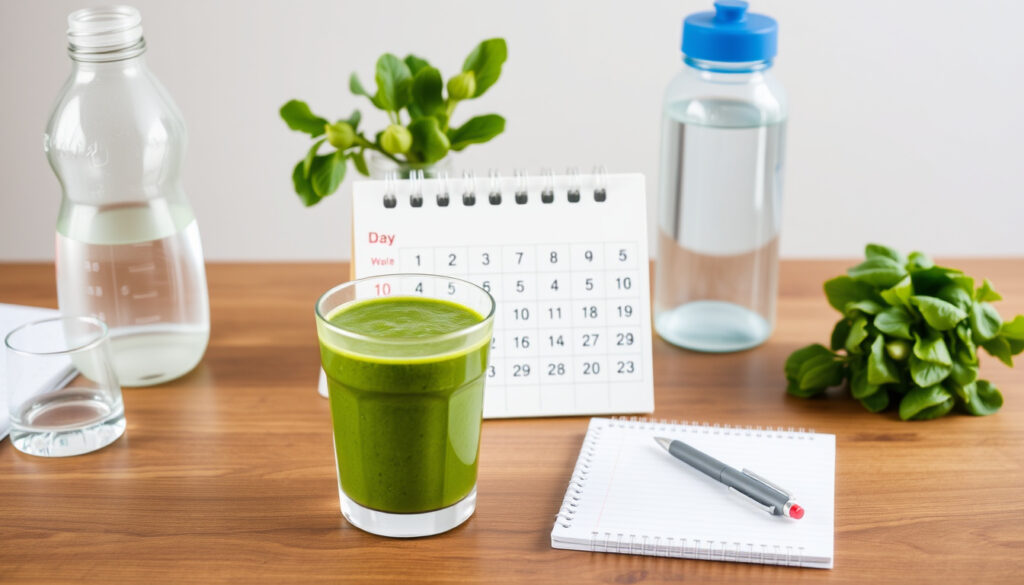
What is the 40 Day Health Challenge? Free Guide & Expert Tips
Anyone who’s tried to overhaul their eating and exercise habits in one go knows how tough it is to stick with it. The 40 Day Health Challenge offers a structured approach that breaks things down into daily goals—eating well, moving more, and improving mental wellbeing. Created by a personal trainer and a GP, it’s a free program built around small, sustainable changes that add up over 40 days. Here’s what you can realistically expect if you decide to join the growing community.
Average weight loss reported: 5‑10 kg (11‑22 lbs) ·
Daily step goal: 10,000 steps ·
Program duration: 40 consecutive days
Quick snapshot
- The challenge is free to join and created by Karl Henry and Dr. Sumi Dunne (40 Day Health Challenge Ireland (official site))
- Daily goals include 10,000 steps and balanced meals (40 Day Health Challenge Facebook (program introduction))
- Over 40 days, sustainable weight loss averages 5‑10 kg according to participant reports (BetterMe (online health publication))
- Exact global participant numbers are self-reported and not independently verified (official site) (Healthline (health and wellness publisher))
- Long‑term weight maintenance after the 40 days is not systematically tracked (official site) (Healthline (health and wellness publisher))
- No peer‑reviewed clinical studies confirm the program’s specific outcomes (Healthline (health and wellness publisher))
- Launched in 2020 in Ireland by Choice Broadcasting Ltd (official site)
- 2026 edition runs from January 5 to February 13 (official site)
- Typically held January–February to align with New Year resolutions (Facebook video)
- Sign up for free on the official website or social media to receive daily guidance (official site) (BetterMe (online health publication))
- After 40 days, consider joining the next edition or maintaining habits independently (BetterMe (online health publication))
- Check with your GP before starting if you have medical conditions (NHS (UK public health authority))
Six key facts summarise the challenge’s structure and expectations.
| Program start date (2026 edition) | January 5, 2026 |
|---|---|
| End date (2026 edition) | February 13, 2026 |
| Cost | Free to join |
| Daily step goal | 10,000 steps |
| Weekly weight loss target | 0.5‑1.5 kg (1‑3 lbs) typical |
| Expert backing | GP and personal trainer |
The table shows the program’s official specs; note that the weekly loss range is typical but individual results vary.
What is the 40 day health challenge?
Origins of the challenge
The 40 Day Health Challenge was created in 2020 by personal trainer Karl Henry and GP Dr. Sumi Dunne, working with Choice Broadcasting Ltd in Ireland (Facebook video). It is a free, 40‑day program that combines eating well, moving more, and improving mental wellbeing. The official site provides a daily meal plan, exercise plan, and mental wellbeing tips (official site). Over 50 recipes are included as part of the package.
Who are the experts behind it?
Karl Henry is a well‑known personal trainer and TV fitness expert in Ireland. Dr. Sumi Dunne is a practising GP, which gives the program a medical grounding. The combination of fitness coaching and clinical oversight is a key differentiator from many online challenges (official site).
The implication: the program trades on expert credibility, but lacks independent validation – a trade‑off participants must weigh.
Is the 40 day health challenge free?
What does the free version include?
Yes, the challenge is completely free to join. Participants can sign up via the official website or social media channels and receive access to the daily plans, recipes, and community support. No payment is required (official site).
Are there paid upgrades or products?
Optional paid resources such as branded merchandise or more detailed meal plans may be offered, but they are not necessary to follow the challenge. The core program remains free (Facebook video).
What this means: cost is not a barrier, but the absence of a paywall means the program relies on community engagement rather than premium content.
How can I lose 10 kg in 40 days?
Is losing 10 kg in 40 days realistic?
A weight loss of 5‑10 kg over 40 days is reported by consistent participants, according to a guide from BetterMe. That equates to roughly 1‑2 pounds per week, which falls within the range of healthy, sustainable loss for many people. However, losing the upper end of that range requires a calorie deficit of about 1,000‑1,200 kcal per day, which is aggressive.
Key dietary changes
The challenge promotes balanced meals with portion control. Tactics include using smaller plates, measuring foods, avoiding distracted eating, and dividing bulk foods into smaller portions (BetterMe). Sharing an entrée when dining out is also recommended as a way to manage serving sizes.
Exercise recommendations
The primary physical activity goal is walking 10,000 steps daily. The challenge encourages gradual progression for beginners. This level of activity can contribute significantly to the calorie deficit needed for weight loss (official site).
The catch: the higher end of the weight‑loss range demands a deficit that most people find hard to sustain, and the program does not provide medical supervision for extreme calorie restriction.
How many minutes of walking is 10,000 steps?
Average pace and time
For most people, walking 10,000 steps at a moderate pace takes approximately 80‑100 minutes. This equates to about 8 km or 5 miles (NHS).
How to build up to 10,000 steps a day
The challenge recommends starting with whatever your current step count is and gradually increasing by 500‑1,000 steps per day until you reach the target. Break walking into shorter sessions if needed (official site).
The pattern: the step goal alone can consume nearly two hours daily – a commitment that may clash with busy schedules.
What is the 3 3 3 rule of eating?
How does this rule support weight loss?
The 3 3 3 rule is a simple eating framework: three balanced meals per day, each containing protein, fiber, and healthy fats. It discourages snacking between meals and promotes mindful eating. While the challenge itself does not expressly mandate the rule, many participants combine it with the program’s meal plan (BetterMe).
Sample application on a daily menu
A typical day might include: breakfast with eggs, oatmeal, and berries; lunch with grilled chicken, quinoa, and vegetables; dinner with fish, sweet potato, and greens. Each meal would include a protein source, fiber‑rich carbs, and a small amount of healthy fat. No snacking between meals (NHS).
The implication: the rule’s simplicity makes it easy to adopt, but its rigidity may not suit everyone – some people need more frequent, smaller meals.
Pros and cons
Upsides
- Free to join with no hidden costs
- Designed by a GP and personal trainer, adding credibility
- Includes practical meal plans and recipes
- Community support via social media
- Focus on mental wellbeing alongside diet and exercise
Downsides
- No peer‑reviewed evidence specific to the program
- Long‑term results beyond 40 days are not tracked
- The daily time commitment (80‑100 min walking) may be difficult for busy people
- Some participants find it hard to maintain the strict routine after the challenge ends
The trade‑off: short‑term structure and expert backing versus a lack of long‑term support and independent validation.
Steps to start the 40 day health challenge
- Visit the official website and sign up for free. Provide your email address to receive daily guidance (official site).
- Review the 40‑day meal plan and recipe booklet that comes with the program. Stock your kitchen with the recommended foods (official site).
- Set up a step tracker (phone, fitness band, or pedometer) and record your current daily step count. Plan to increase gradually toward 10,000 (NHS).
- Commit to the 3‑3‑3 rule by eating three balanced meals with protein, fiber, and healthy fats. Avoid snacking between meals (BetterMe).
- Track your progress weekly – weigh yourself once per week, note energy levels, and check in with the community on Facebook or Instagram (Facebook video).
Following these steps in order gives participants a clear launch pad, but the real test is consistency after the novelty wears off.
Timeline
- 2020 – The 40 Day Health Challenge launched in Ireland by Choice Broadcasting Ltd (official site).
- January 5, 2026 – Scheduled start date for the 2026 edition (official site).
- February 13, 2026 – Scheduled end date (official site).
- Annually (January–February) – The challenge aligns with New Year health resolutions (Facebook video).
The timing deliberately taps into post‑holiday motivation, though the January start may clash with cold weather and lower energy levels.
What’s clear and what’s not
Confirmed facts
- The challenge is free to join. (official site)
- It was created by Karl Henry and Dr. Sumi Dunne. (official site)
- It runs for 40 consecutive days. (official site)
- The daily goal includes 10,000 steps. (official site)
What remains unclear
- Exact number of participants worldwide (official figures are self‑reported). (official site)
- Long‑term weight maintenance after 40 days (not systematically tracked). (official site)
- Clinical evidence for the program’s outcomes (no peer‑reviewed studies found). (Healthline)
- Effectiveness of specific dietary tricks like the three‑ingredient drink (anecdotal only). (BetterMe)
The mix of confirmed and unclear points shows that while the program is transparent about what it offers, independent verification is thin.
What participants and experts say
It’s about making small, sustainable changes that add up over 40 days.
– Karl Henry, personal trainer and co‑creator (Facebook video)
Always consult your own GP before starting any new diet or exercise program.
– Dr. Sumi Dunne, GP and co‑creator (YouTube: Day 27 Results on the 40 Day Health Challenge (participant testimonial))
For the busy parent or office worker in Ireland looking to shed weight after the Christmas period, the choice is clear: follow the challenge’s structure for 40 days, or continue without a framework and risk losing momentum. The program gives you a proven template – you bring the consistency.
For those seeking to kickstart their journey, the 40 Day Health Challenge pairs well with free expert-backed diet plans designed by the NHS and other health authorities.
Frequently asked questions
Is the 40 day health challenge suitable for beginners?
Yes, the program is designed for all fitness levels. Beginners are encouraged to start with fewer steps and gradually increase to the 10,000‑step goal (official site).
Do I need to buy special food or supplements?
No. The challenge promotes everyday whole foods. You can use the provided recipes with normal grocery items (official site).
Can I do the challenge if I have a medical condition?
The NHS advises anyone with a medical condition, a special diet, or a history of eating disorders to speak with a GP before starting (NHS). The program’s GP co‑creator echoes that advice.
What happens after the 40 days?
The challenge ends, but many participants continue the habits they built. The program does not offer a formal maintenance phase (BetterMe).
Is there an app for the 40 day health challenge?
No dedicated app, but the official website and social media channels deliver daily content that works on mobile browsers (official site).
How do I sign up for the challenge?
Visit the official website and enter your email address. You’ll receive access to the plans and community (official site).
Are there any age restrictions for participants?
The program is intended for adults. If under 18, parental supervision and medical advice are recommended (NHS).
The FAQs address the most common doubts, but prospective participants should still evaluate whether the program fits their personal schedule and health status.
Related reading
- Best Exercises for Metabolism – practical workouts to complement your walking routine.
- Lose Weight Fast Naturally and Permanently – long‑term strategies beyond the 40‑day window.
More related posts
 Harry Potter LEGO Sets Guide: New, Rare & Best Buys
 Biggest City in the World 2025: Rankings, History & 2050
 New England Patriots Standings: 2024 Record & 2025 Outlook
 E and D Motors: Dublin Independent Used Car Dealer Guide
 Redundancy Tax Calculator Ireland: Cut Your Tax Bill
 Beef Stew in Slow Cooker: Best Recipe, Tips & Cooking Times
 B&Q Ireland Guide: Stores, Delivery & Tips
 What Is Magnesium Good For? Benefits, Uses & Deficiency Signs
