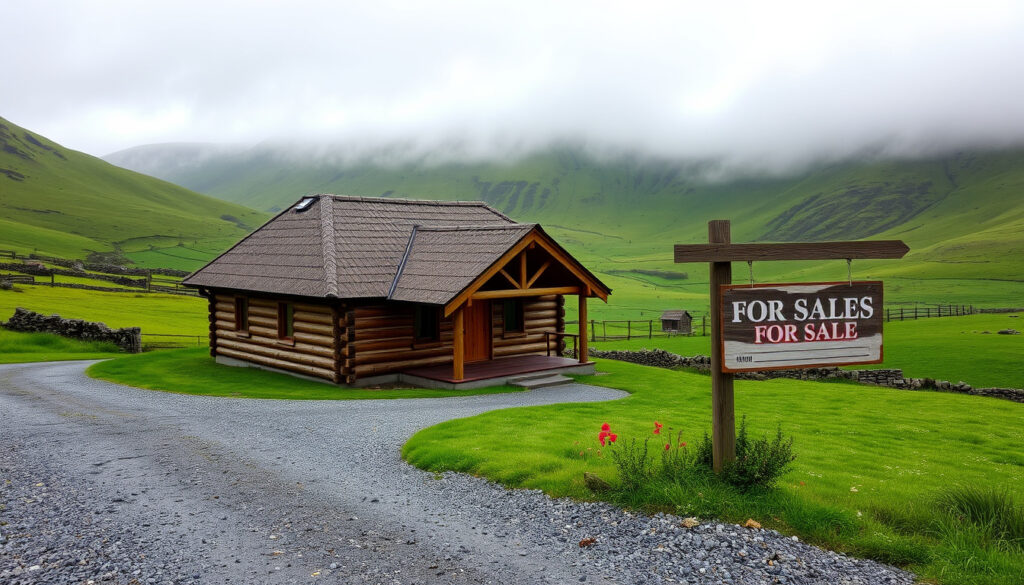
Log Cabins for Sale Ireland: Prices, Planning & Care
If you’ve been scrolling through property listings in Ireland, you’ve probably noticed more log cabins popping up — from compact studio cabins on DoneDeal to full three-bedroom structures on supplier sites. Between the appeal of a garden office and the dream of a low-cost home, the question turns from “would you want one?” to “can you actually get one?” — this guide walks through the real prices, planning rules, and maintenance realities using the latest 2026 exemption changes and supplier data.
Starting price (5m x 5m studio): €20,000 ·
One-bed cabin (7.2m x 5.5m): €30,300 ·
DoneDeal log cabin ads: 127
Quick snapshot
- New one-bed cabins from Irish suppliers cost €20,000–€30,300 (Eco-Home.ie supplier pricing)
- DoneDeal lists 127 second-hand cabins, some from €2,000 (DoneDeal classifieds)
- Exact planning thresholds depend on cabin use and site location; a local authority query is essential (Do I Need Planning guide)
- No single source covers maintenance frequency tailored to Irish damp conditions (Selectra Ireland overview)
- Year 1: Initial treatment and settling inspection (Timber Living maintenance notes)
- Every 2–5 years: Brush-on stain or finish (Irish Log Cabins care guide)
- From 27 July 2026, habitable garden cabins of 32–45 m² may qualify for Class 3A exemption (Permission.ie regulatory update)
- 14-day advance notification to local authority required (Permission.ie guidance)
The table below pulls together the key numbers every Irish buyer needs before shopping for a log cabin.
| Attribute | Value |
|---|---|
| New price range (Irish suppliers) | €20,000 – €30,000 for 1‑bed |
| One‑bed cabin | €23,000 – €30,300 |
| Second‑hand classifieds | from €2,000 (DoneDeal) |
| Marketplace listing count | 127 DoneDeal ads |
| Pre‑2026 exemption (non‑habitable, garden) | up to 25 m² (Eco-Home.ie) |
| New 2026 habitable exemption (Class 3A) | 32–45 m² (Permission.ie) |
| Maximum height under new exemption | 4 m (3 m near boundaries) (Selectra Ireland) |
| Boundary setback required | 0.6 m (Selectra Ireland) |
| Rental / business use | Planning permission required (Do I Need Planning) |
Can I get planning permission for a log cabin in Ireland?
Once you put a log cabin on your land, the question isn’t really whether you need planning permission — it’s what you intend to use it for. That single distinction is what separates a simple garden shed from a dwelling that requires full planning, extra fees, and site notice.
The three use categories that matter
- Non‑habitable (shed, workshop, garden office): Under 25 m² at the rear of the house — generally exempt (Bayt.ie planning blog)
- Habitable ancillary dwelling (new Class 3A): 32–45 m², must share services with the main house, cannot be sold or let separately (Permission.ie planning authority summaries)
- Independent home or rental: Not exempt — full planning application needed (Do I Need Planning independent planning advisory)
The crucial detail: a cabin used as a separate living accommodation or for short‑term letting does require planning permission, even if it’s under 25 m². That’s where many buyers get caught. The Do I Need Planning guide is explicit: “if the cabin is intended as separate living accommodation, a planning application is needed unless it qualifies under the new habitable garden home exemption.”
The new Class 3A exemption is generous on paper, but requires the cabin to be “ancillary” — meaning you can’t use it as a standalone granny flat or rent it out. Permission.ie notes that 14 days’ notification to the local authority is mandatory, and the structure must share the main house’s water, electricity and drainage.
The implication: don’t assume exemption applies. A call to your local authority’s planning department — and a written opinion — costs nothing and could save you a costly retrospective application.
What is the maximum size log cabin without planning permission?
Size limits changed in July 2026, creating two separate exemption regimes. Before that date, a non‑habitable log cabin up to 25 m² could go up at the rear of a house without planning, as long as at least 25 m² of garden remained (Bayt.ie). Under the new rules, a habitable cabin of 32 to 45 m² becomes exempt under Class 3A — but only if it meets the ancillary and notification conditions (Permission.ie).
Three numbers you need to remember:
- 25 m² — pre‑2026 non‑habitable limit (still valid for sheds/offices – Eco-Home.ie)
- 32–45 m² — new 2026 habitable exemption (Selectra Ireland)
- 4 m — maximum height under the new exemption (Selectra Ireland)
The trade-off: you can build larger, but you lose flexibility — no separate utility connections, no separate sale, and you must notify the council 14 days before work starts (Permission.ie).
Are log cabins a good investment?
If “good investment” means a structure that retains or adds value when you sell the house, the answer depends on how you build it and what you do with it.
Per‑square‑metre cost vs. an extension
- A basic 25 m² log cabin kit costs about €800–€1,200 per m² installed (Irish Log Cabins product pricing)
- A traditional masonry extension in Ireland runs €1,500–€2,500 per m² (Selectra Ireland construction cost comparison)
A log cabin is cheaper per square metre to build, but its long‑term value is harder to pin down. Estate agents often view a high‑quality, insulated log cabin with proper foundations as a positive — especially if it’s used as a home office or guest room. But a poorly maintained cabin or one that’s clearly a temporary structure will be a detractor.
Rental income risk
- Renting out a log cabin without planning permission can lead to enforcement action (Do I Need Planning)
- Short‑term letting is explicitly not allowed under the new Class 3A exemption (Selectra Ireland)
A cabin that is affixed to the ground with proper utilities and planning permission can add value. A cabin parked on blocks without permission is a liability. The difference often hinges on whether you treat it as a building or as a garden shed.
How long will a log cabin last in Ireland?
Timber expands, contracts, and rots in the wet Irish climate — but a well‑maintained log cabin in Ireland can last 30 to 50 years, and some properly cared‑for examples reach 60 years. The key variable is moisture management from day one.
Three factors that determine cabin lifespan
- Foundation height: A concrete base raised at least 150 mm above ground level stops ground moisture wicking into the timber (Timber Living construction guide)
- Ventilation: Cabins with air gaps under the floor and sufficient eaves overhang dry out much faster after rain (Irish Log Cabins technical notes)
- Finish quality: Breathable wood stain applied to dry timber, maintained every 2–5 years, significantly reduces rot risk (Timber Living maintenance advice)
The warranty offered by suppliers is a good proxy for expected lifespan. Most Irish log cabin suppliers provide a 5‑ to 10‑year structural warranty on the timber, provided the cabin is treated and maintained according to their schedule (Eco-Home.ie warranty statement).
What is the upkeep of a log cabin?
A log cabin in Ireland demands more regular maintenance than a brick‑and‑block extension. The damp climate accelerates weathering, but the routine is straightforward if you stick to a schedule.
How often does a log cabin need to be stained?
- Every 2–5 years, depending on exposure (Timber Living care guide)
- Use a breathable wood stain applied to dry timber (Irish Log Cabins product recommendation)
How often should you seal your log cabin?
- Check joint seals and roof flashings every 1–2 years (Selectra Ireland maintenance list)
- Full pressure wash and re‑seal every 5–10 years (Timber Living)
Can you power wash a log home?
Yes, but only with a low‑pressure nozzle (max 1,200 psi) and a wide fan spray held at least 300 mm from the wood. Using a high‑pressure washer can blast the softer springwood out of the grain, creating pits that hold moisture. Always wash with the grain, not against it (Timber Living power‑washing guidelines). After washing, allow the cabin to dry for 48 hours before applying any finish.
What fills the gaps in a log cabin?
Modern log cabins use interlocking tongue‑and‑groove joints that don’t require traditional chinking. If gaps do appear — usually because of timber shrinkage in the first year — a flexible, permanently elastic acrylic sealant designed for log homes is the correct filler. Avoid rigid caulk that cracks as the timber moves (Irish Log Cabins product advice).
What is the best exterior finish for a log cabin?
- A water‑based, breathable wood stain (micro‑porous) allows moisture vapour to escape while repelling rain (Selectra Ireland exterior finish recommendation)
- Apply to dry timber only — wet timber traps moisture and promotes rot (Eco-Home.ie application notes)
What are the must‑haves for a cabin?
Beyond the log walls, a handful of features separate a cabin that lasts from one that becomes a money pit. Here’s the shortlist based on supplier specifications and user reviews from DoneDeal.
- Damp‑proof course (DPC): A physical barrier between the concrete base and the timber base plate (Irish Log Cabins build spec)
- Good eaves overhang: At least 300 mm to deflect rainwater from walls (Timber Living design notes)
- High‑performance glazing: Double or triple glazing with a low‑E coating; building regulation U‑value ≤ 1.6 W/m²K for windows (Selectra Ireland insulation requirements)
- Ventilation system: At least one trickle vent per room to prevent condensation (Eco-Home.ie ventilation advice)
- Security: Multi‑point locking doors and lockable windows — standard on most supplier models
The pattern: buyers who skip the DPC or skimp on eaves often post on DoneDeal within a few years, selling a cabin that’s already showing rot at the base. Those three items — DPC, overhang, ventilation — are non‑negotiable on any cabin intended to last more than a decade.
Comparing your options: new vs. second‑hand cabins
The choice between a brand-new cabin from a supplier and a second-hand find on DoneDeal is not just about the sticker price — the trade-offs affect everything from warranty coverage to assembly cost.
| Feature | New from supplier | Second‑hand (DoneDeal) |
|---|---|---|
| Price range | €20,000 – €30,000+ | €2,000 – €12,000 |
| Warranty | 5–10 year structural warranty (Eco-Home.ie) | None — as‑is |
| Condition | Brand new, treated timber | May need new sealant or structural repairs |
| Assembly cost | Often included or quoted separately | DIY removal and re‑erection required |
| Planning documentation | Supplier can provide spec sheets for exemption claims | May lack original paperwork |
The catch: a second‑hand cabin from DoneDeal often needs several thousands in repairs and new treatment — and it may not meet modern building regulations for insulation or safety. If you’re handy and the price is right (some sell for €2,000), it can be a bargain, but factor in €1,000–€3,000 for renovation.
Specifications of typical Irish log cabin models
Irish suppliers offer standardised floorplans that make it easy to compare options side by side — here is how the most popular sizes stack up.
| Parameter | Studio (5m × 5m) | One‑bed (7.2m × 5.5m) |
|---|---|---|
| Floor area | 25 m² | 39.6 m² |
| Wall thickness | 44–50 mm | 44–50 mm |
| Roof type | Pitched, shingles or metal | Pitched, shingles or metal |
| Windows | Double glazed, 1–2 units | Double glazed, 3–4 units |
| Foundation required | Concrete slab, DPC | Concrete slab, DPC |
| Typical price (supplier) | €20,000 | €30,300 |
| Warranty | 5–10 years | 5–10 years |
The pattern: once you cross 25 m², you enter Class 3A territory (if habitable) or need full planning. The one‑bed model at 39.6 m² fits neatly under the 45 m² cap, making it a popular choice for buyers aiming for the new exemption.
Pros and cons of buying a log cabin in Ireland
Upsides
- Lower per‑square‑metre cost than a masonry extension (Selectra Ireland)
- Quick construction — most cabins are erected in 1–2 weeks
- Adds usable space for home office or guest room
- Can qualify for new habitable exemption up to 45 m² (Permission.ie)
Downsides
- Ongoing maintenance: staining every 2–5 years (Timber Living)
- Risk of rot if foundation or ventilation is poor
- Planning restrictions: cannot be used for permanent residence without full permission
- Resale value uncertain — adds less to property price than a brick extension
The decision comes down to whether the lower upfront cost and faster build outweigh the ongoing maintenance and planning constraints that come with timber construction.
Steps to install and maintain your log cabin
- Check planning exemption eligibility — confirm size, use, and site with your local authority (Do I Need Planning)
- Choose a supplier — compare prices, warranties, and timber thickness (44 mm minimum suggested)
- Prepare the foundation — cast a reinforced concrete slab with a damp‑proof membrane raised at least 150 mm above ground
- Install the cabin — follow manufacturer instructions, ensuring all wall logs are level and interlocked
- Apply first treatment — a full coat of breathable wood stain to all exterior surfaces within 4 weeks of installation (Irish Log Cabins)
- Set up ventilation — install trickle vents and a roof‑mounted extractor fan if usable space
- Annual inspection — check seals, flashings, and timber for signs of moisture or rot each spring
- Re‑stain every 2–5 years — wash, dry, and apply fresh coat of breathable finish (Timber Living)
- Deep clean every 5–10 years — low‑pressure wash and full re‑seal (Selectra Ireland)
Following this sequence reduces the likelihood of costly moisture damage and ensures the cabin stays within warranty terms throughout its first decade.
What’s certain and what’s not
Confirmed facts
- Several Irish suppliers list log cabins for sale with public prices (€20,000 – €30,000 range) (Eco-Home.ie)
- DoneDeal shows active second‑hand log cabin listings from around €2,000 (DoneDeal)
- A log cabin for permanent habitation has a different planning threshold than a garden shed (Do I Need Planning)
- The new Class 3A exemption (32–45 m²) came into force on 27 July 2026 (Permission.ie)
What’s unclear
- Exact planning exemption thresholds change depending on cabin use and site; a local authority query is required (Do I Need Planning)
- No single independent source covers all maintenance frequency claims for Irish conditions (Selectra Ireland)
The gap between confirmed and unclear is a reminder that local authority queries and site-specific factors should guide every decision, not blanket rules found online.
Expert perspectives
“The new Class 3A exemption is tied to SI 340/2026 and allows a detached habitable garden cabin of 32 to 45 square metres to be exempt from planning permission, provided it is in the rear garden and only as an ancillary dwelling to the main house.”
Permission.ie planning authority summaries
“A cabin intended as separate living accommodation needs a planning application unless it qualifies under the new habitable garden home exemption.”
Do I Need Planning independent planning advisory
“Outside the exemption limits, full planning permission is required — and cabins used for renting or as business premises also require permission.”
Selectra Ireland home service comparison
The common thread across these three independent planning sources is unambiguous: use determines exemption, and habitation or rental use nearly always triggers a full planning application.
Summary
A log cabin in Ireland can be a cost‑effective way to add space, but the line between exempt garden structure and a full dwelling is thin. The July 2026 changes give you more room — literally — but tie the cabin to the main house in ways that limit its resale and rental flexibility. For the typical Irish buyer, the smartest play is a cabin that meets the new Class 3A conditions and is treated as an ancillary space, not a separate home. For a buyer in Ireland, the decision is clear: invest in a properly permitted, well‑treated cabin with good ventilation, or accept the risk of a structure that costs more in maintenance than it adds in value.
summerhouse24.ie, loghouse.ie, bayt.ie, raycomodularhomes.ie, trilliumbuilders.ie, timberliving.ie
Frequently asked questions
Can I get planning permission for a log cabin in Ireland?
Yes, but it depends on the intended use. Non‑habitable structures under 25 m² (pre‑2026) or habitable cabins 32–45 m² under the new Class 3A exemption may not require full permission. Separate dwellings or rental cabins always need a planning application. Do I Need Planning provides a detailed breakdown.
What is the maximum size log cabin without planning permission?
Under the pre‑2026 rules, a non‑habitable cabin up to 25 m² at the rear of the house is exempt. From July 2026, a habitable cabin of 32 to 45 m² may qualify under Class 3A. Permission.ie has the full conditions.
Are log cabins a good investment?
They are cheaper per square metre than a traditional extension (£800–£1,200 vs £1,500–£2,500), but resale value is lower unless the cabin is high quality, well maintained, and has planning permission. Selectra Ireland compares costs.
How long will a log cabin last in Ireland?
With proper maintenance — raised foundation, ventilation, regular staining — a log cabin can last 30 to 50 years. Timber Living notes that moisture control is the key factor.
What is the upkeep of a log cabin?
Upkeep includes re‑staining every 2–5 years, checking seals annually, and a full pressure wash and re‑seal every 5–10 years. Irish Log Cabins recommends a breathable wood stain.
What are the must‑haves for a cabin?
Essential features: damp‑proof course, good eaves overhang (≥300 mm), double glazing, ventilation, and multi‑point locking. These protect against moisture and condensation. Eco-Home.ie stresses the importance of a raised foundation.
How to keep a log cabin from rotting?
Ensure the base is raised above ground with a DPC, maintain good ventilation, apply breathable stain on dry timber, and check moisture levels annually. Timber Living has a maintenance checklist.
More related posts
 Laser Eye Surgery Ireland: 2025 Cost, Worth, and Regret Rates
 The Maritime Hotel Bantry: Pool, Rooms & Reviews Guide
 Signs of Gestational Diabetes: What to Look For
 We Bury the Dead: Where to Watch, Cast, Reviews (2026)
 Do They Know It’s Christmas? History of Band Aid’s Charity Hit
 Maldron Hotel Sandy Road Galway: Location, Reviews, Prices
 E and D Motors: Dublin Independent Used Car Dealer Guide
 Carpal Tunnel Syndrome Treatment: Symptoms, Red Flags, Surgery
